
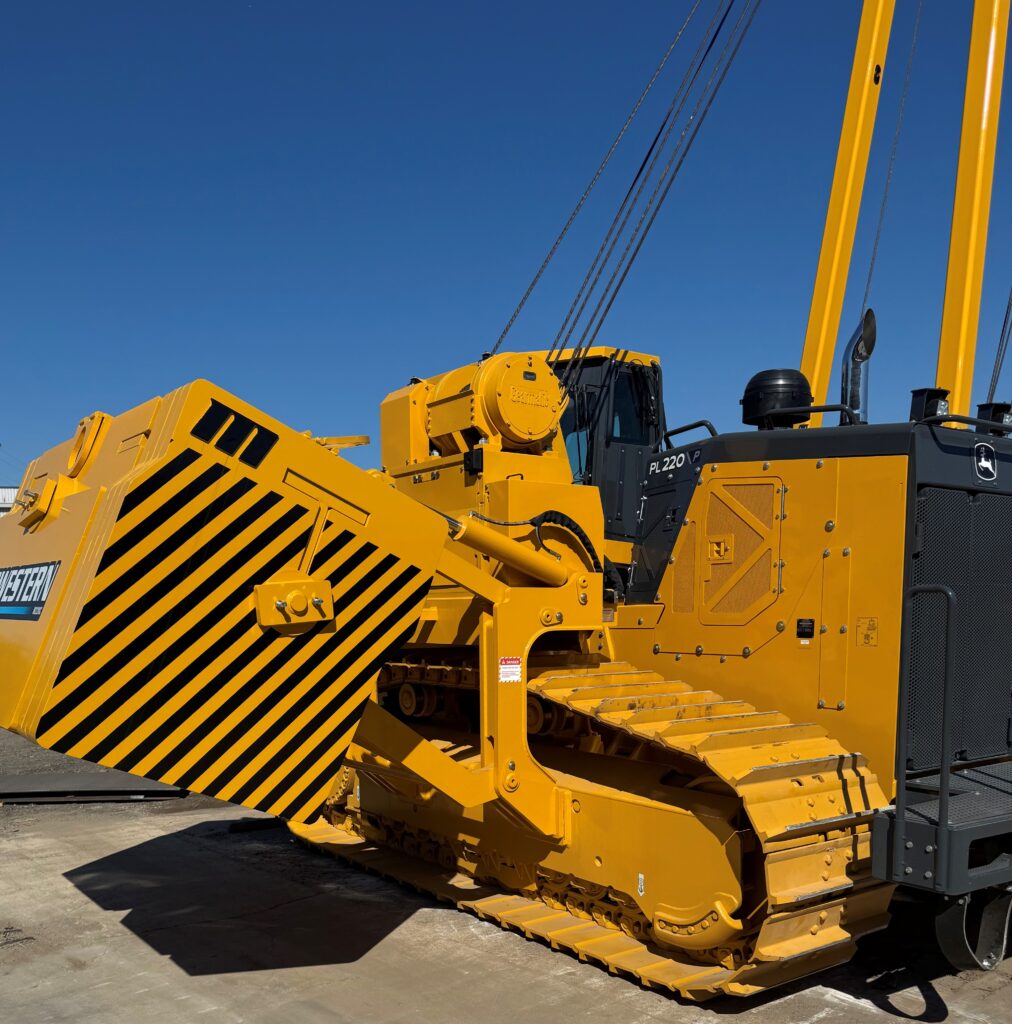
Sideboom Counterweights: How They Work and What to Check
A sideboom counterweight is the part that lets a tractor carry a heavy pipe on a boom without tipping toward it. It sits on the opposite side of the machine from the boom, and it is a big reason a sideboom can lift what it does. Because it is tied directly to capacity and stability, it is worth understanding how it works and what to check. This guide covers both.
Where the Counterweight Sits and What It Does
On a conventional sideboom or pipelayer, the boom is mounted on the tractor’s left side, and the hoist works and counterweight sit on the opposite side, as described in this history of sidebooms. A load hanging on the boom creates a tipping force that grows with the weight and with how far out it is handled. That is the same load moment idea behind every load chart. The counterweight pushes back in the other direction, helping keep the machine balanced.
Two Common Designs
- Static counterweights. Fixed sections that can be added or removed depending on the machine’s design needs.
- Hydraulically adjustable counterweights. These can be raised vertically for transport and storage, or swung away from the tractor for lifting. In the design described in the same history, lifting capacity increased as the counterweight was moved away from the load.
Most counterweights swing down to lower the pipelayer’s overall center of gravity, which improves stability. There is a trade-off in mounting height: a higher pivot point improves ground clearance, so designers balance stability against clearance.
Midwestern offers counterweights for new and older tractors, along with hydraulic conversion kits, as part of its custom pipeline equipment.
Why the Counterweight Setup Is Part of the Rating
A sideboom’s rated capacity is not a single number. According to Midwestern’s guide to the ASME B30.14 sideboom standard, load ratings must be established for each machine configuration, accounting for boom length, counterweight setup, and operating radius, and counterweight geometry is specific to the boom length and rated capacity.
That is why a counterweight is not something to adjust or add to on your own. ASME B30.14, as incorporated by OSHA in 29 CFR 1926.1440, calls for a rated load test on equipment that has been altered or modified. If you are thinking about changing a counterweight arrangement, talk to the manufacturer first, and always use the load chart that matches the configuration actually on the machine.
What to Check
Equipment inspection guidance for pipelayers and sidebooms, such as this inspection checklist, includes a few counterweight-related checks:
- Look for modifications. Check the counterweights for any modifications, on the side opposite the boom.
- Run the controls. Operate the boom, hoist, and counterweight controls and note any operating problems or abnormal sounds.
- Check the hydraulics. Look for damaged hoses, chafed wires, and wet spots, since a wet spot in the engine compartment may point to a hydraulic leak.
- Match the chart. Confirm the configuration on the machine matches the rating you are working from.
Frequently Asked Questions
What does a counterweight do on a sideboom?
It balances the tipping force created by a load on the boom. It sits on the opposite side of the tractor from the boom.
What is the difference between static and hydraulically adjustable counterweights?
A static counterweight is made of fixed sections that can be added or removed. A hydraulically adjustable counterweight can be raised for transport and storage or swung away from the tractor for lifting.
Does the counterweight affect the load chart?
Yes. Under ASME B30.14, load ratings are established for each machine configuration, and counterweight setup is one of the factors, along with boom length and operating radius.
Can I add more counterweight to lift heavier loads?
Not on your own. Rated capacity depends on the configuration the machine was rated in, and ASME B30.14 calls for a rated load test on equipment that has been altered or modified. Talk to the manufacturer before changing a counterweight arrangement.
Does Midwestern offer counterweights for older tractors?
Yes. Midwestern offers counterweights and hydraulic conversion kits for both new and older model tractors.
Match the Counterweight to the Job
A well-matched counterweight setup keeps a sideboom balanced and within its rating. To learn more about counterweights, hydraulic conversion kits, or any of our pipelayers and pipeline equipment, contact Midwestern Manufacturing today.
Author: Doug G.
Comments are closed.