
Sideboom vs Crane vs Excavator: What Actually Wins on Real Jobsites?
Choosing the right equipment for a pipeline job isn’t just a technical decision—it’s a financial one. The wrong machine can slow your crew, create safety risks, and drive up costs fast. That’s why the sideboom vs crane vs excavator question matters more than ever.
At Midwestern Manufacturing, we’ve spent decades working alongside contractors in real-world conditions—here’s what we’ve learned.
Sideboom vs Crane vs Excavator: Key Differences That Matter
All three machines can lift, move, or position heavy materials—but their design and jobsite performance vary significantly.
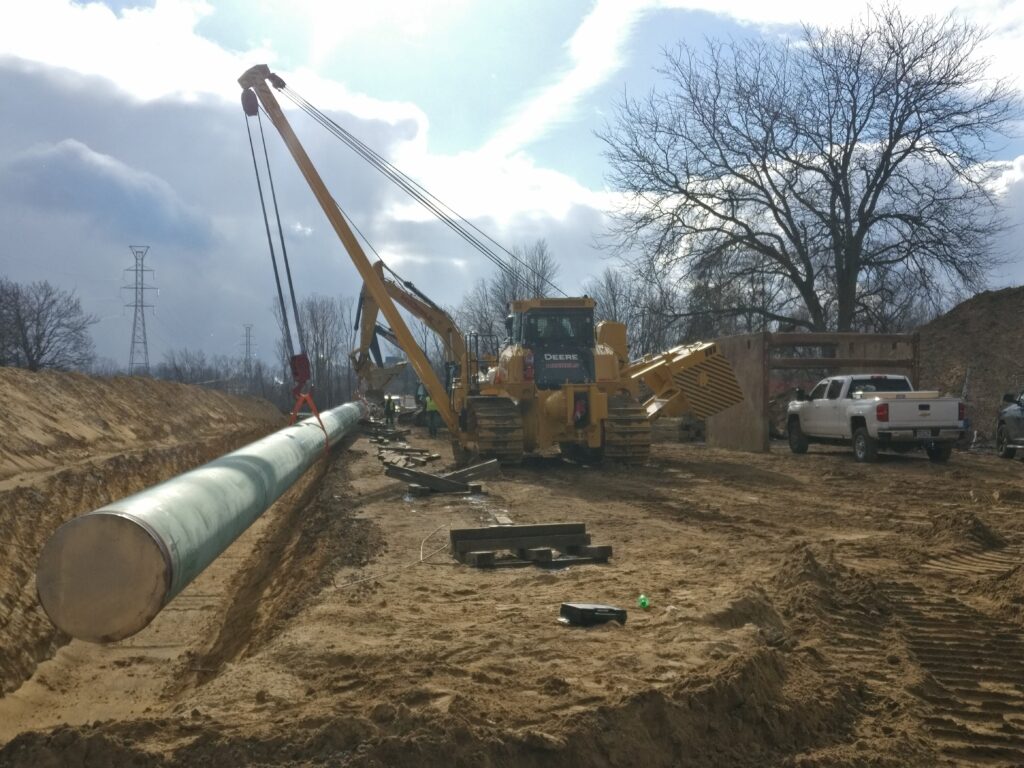
A sideboom (also called a pipelayer) is engineered for pipeline work. It uses a side-mounted boom and counterweight system to lift and position pipe with precision across uneven terrain—purpose-built for stability when handling long, heavy loads.
A crane, on the other hand, is designed for vertical lifting and reach—ideal when you need height or need to lift over obstacles. They require more setup time, stable ground, and additional support equipment.
An excavator is the most versatile of the three. With the right attachments—like a winch or lifting hook—it can dig, lift, pull, and handle recovery. That flexibility makes it a strong contender, especially when efficiency matters.
When to Use a Sideboom vs Crane on Pipeline Jobs
Sidebooms dominate pipeline spreads because they’re built for the task. Controlled lateral lifting lets crews place pipe accurately along the right-of-way, and their tracked design handles rough, sloped, or muddy terrain where cranes struggle.
Cranes come into play when you need vertical lift—such as lifting pipe over obstacles or into deep trenches where height and reach are non-negotiable.
Still, cranes require:
- More setup time
- Stable, level ground
- Additional crew coordination
Sidebooms are the backbone of pipeline work; cranes are used more selectively. In the sideboom vs crane vs excavator decision, terrain and lift requirements should always drive the call.
American Society of Mechanical Engineers (ASME)
Excavator vs Crane for Pipeline Work: Which Is More Efficient?
Excavators equipped with attachments, especially winches, are increasingly supplementing or replacing traditional lifting equipment—letting a single machine handle digging, lifting, pulling, and recovery.
Compared to cranes, excavators offer:
- Faster mobilization
- Greater mobility across the jobsite
- Reduced equipment transport costs
- Fewer machines to manage and maintain
When a lift doesn’t require extreme height or reach, an excavator with the right attachment often completes the job faster and at lower cost—making the excavator vs crane question one of efficiency as much as capability.
This trend is supported by the U.S. Department of Energy.
What Equipment Is Best for Pipeline Construction?
The most effective pipeline crews build a system where each machine plays to its strengths:
- Sidebooms handle consistent pipe placement along the spread
- Excavators provide versatility and support multiple tasks
- Cranes step in when height and reach are non-negotiable
The “winner” isn’t one machine—it’s the right combination, used strategically. Many contractors are also shifting toward leaner fleets, using excavator attachments to reduce fleet size while maintaining productivity.
How Terrain Changes the Sideboom vs Crane vs Excavator Decision
Terrain is one of the most overlooked factors—and it can completely change your equipment strategy.
Sidebooms shine in rugged environments—their tracked design and low center of gravity let them operate safely on slopes, uneven ground, and challenging right-of-way conditions.
Cranes, by contrast, require stable footing. Soft ground, inclines, or tight spaces can limit their effectiveness or require additional setup like mats or grading.
Excavators fall in between—mobile and adaptable, but their lifting capacity depends heavily on configuration and attachments.
Organizations like OSHA reinforce the importance of factoring ground conditions into every equipment decision. In the sideboom vs crane vs excavator comparison, terrain is often the deciding factor.
Reducing Fleet Size Without Sacrificing Productivity
One of the biggest industry shifts is toward leaner fleets. Contractors are consolidating where it makes sense—and excavator attachments like winches and lifting systems are making that possible.
A multi-purpose excavator helps you:
- Reduce transportation costs
- Minimize idle equipment
- Simplify crew coordination
- Increase jobsite flexibility
But consolidation doesn’t mean replacing purpose-built equipment. Sidebooms remain the most efficient solution for pipeline placement, with proven value in recovery, rail, and heavy lifting where precision matters. Excavators handle the secondary tasks so sidebooms stay focused on what they do best.
Excavator Attachments vs Sideboom Systems: What’s the Real Difference?
It’s easy to assume excavators and sidebooms are interchangeable—especially when both can run winch systems. But their jobsite roles are fundamentally different.
Excavator attachments expand a multi-purpose machine’s capabilities. With the right setup, an excavator can dig, lift, pull, and assist with positioning—making it valuable across a wide range of jobsite functions.
A sideboom isn’t a general machine with added capabilities—it’s purpose-built for pipeline work. Its winch is a core component, not an attachment, controlling the boom and load line. Combined with its counterweight system and tracked stability, this allows for precise, controlled pipe placement where accuracy and balance are critical.
In practice, the two work together: excavators handle pulling, positioning, and support work, while sidebooms lead on precision pipe placement—each delivering the most value in the sideboom vs crane vs excavator equation.
The Real Winner on Today’s Jobsites
Sidebooms still dominate pipeline spreads. Cranes own high-reach lifting. Excavators continue expanding their role as the jobsite’s most versatile machine. The contractors who win understand how to balance all three—maximizing efficiency, reducing downtime, and adapting to real conditions.
At Midwestern Manufacturing, we build custom equipment that performs where it matters most. Whether you’re optimizing your fleet or tackling tough terrain, we’re here to help. Contact us today for more information.
Frequently Asked Questions
What is the main difference between a sideboom and a crane?
Sidebooms are purpose-built for pipeline work—their tracked stability and controlled lateral lift make them the go-to for pipe placement. Cranes are designed for vertical reach and height, making them better suited for lifts over obstacles or into deep trenches.
Can an excavator replace a crane on a jobsite?
In some cases, yes. With the right attachments, an excavator can handle many lifting and pulling tasks. However, cranes are still necessary when height and reach exceed what an excavator can safely manage.
Why are sidebooms used in pipeline construction?
Sidebooms offer stability, precision, and mobility along pipeline right-of-way. They are specifically engineered to lift and position pipes efficiently across challenging terrain.
Is it more cost-effective to use an excavator instead of multiple machines?
Often, yes. A properly equipped excavator can reduce the need for additional equipment, lowering transport, maintenance, and labor costs.
How do you choose the right equipment for a pipeline project?
Evaluate terrain, lift requirements, jobsite layout, and overall workflow. Most successful projects use a combination of machines rather than relying on just one.
Author: Doug G.
Comments are closed.