
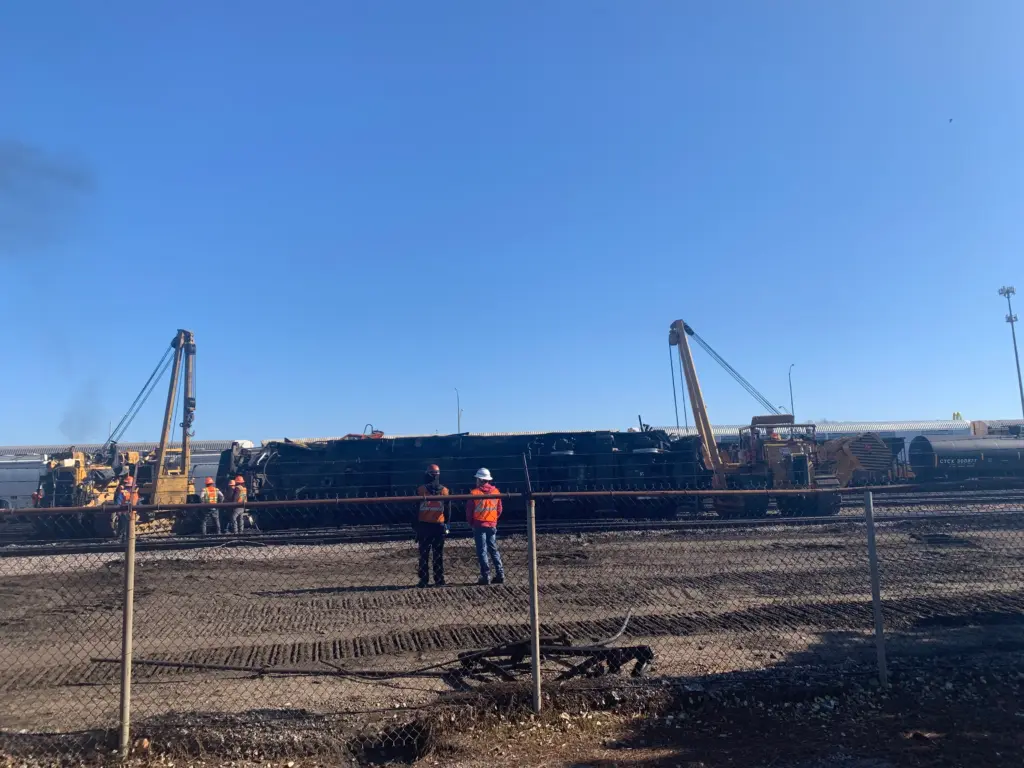
Railroad Recovery Equipment: How Derailed Cars Get Back on Track
When a train derails, the clock starts immediately. Every hour a mainline stays blocked means stalled freight, missed deliveries, lost revenue, and mounting pressure to reopen the line safely. A single incident can ripple across an entire network, holding up dozens of trains and the goods they carry. Getting derailed cars lifted, repositioned, and back on the rails takes purpose-built railroad recovery equipment: machines engineered to move enormous weight with precision under difficult, time-critical conditions. This guide explains what railroad recovery equipment is, the machines that do the work, how they compare, and why the right sideboom and winch make the difference between a fast recovery and a prolonged, costly shutdown.
What Is Railroad Recovery Equipment?
Railroad recovery equipment is the specialized machinery used to respond to derailments and restore rail service. A recovery operation typically involves three phases of work: lifting and repositioning derailed railcars, clearing damaged tracks and debris from the right-of-way, and rebuilding the track structure so trains can run again. Each phase places extreme demands on the equipment involved.
Consider the scale of the problem. A loaded railcar can weigh well over 100 tons, and a derailment often leaves several of them tangled together in positions they were never designed to be moved from. The work frequently happens on unstable ground, in remote locations far from paved access, or in the middle of poor weather. That combination is why recovery equipment has to pair serious lifting capacity with the stability and fine control needed to move massive loads safely and predictably.
The stakes extend beyond cost. According to the Federal Railroad Administration, derailments and other reportable rail accidents are tracked and investigated closely, and returning a line to service is a regulated, high-scrutiny process. Recovery crews work under real oversight, which is exactly why derailment contractors rely on equipment proven to perform safely when it matters most.
The Core Machines Used in Railroad Recovery
Recovery work draws on a few categories of equipment, each suited to a different part of the job. Understanding what each machine does, and where it fits, is the first step to matching equipment to an operation.
Recovery Sidebooms
The sideboom is the workhorse of railroad recovery. With its offset boom mounted to the side of a tracked or wheeled base, a sideboom can lift a derailed car from the side, hold it steady, and set it back on the track with controlled, predictable movement. That side-lifting geometry is ideal for railroad work, where cars often need to be lifted and shifted laterally rather than straight up. Midwestern manufactures dedicated railroad recovery sidebooms, the M572C-RR and M583C-RR, engineered specifically for derailment response and track maintenance. With lifting capacities up to 200,000 pounds, simplified controls, and a hydraulic design built around safety, these machines are purpose-made to lift, hold, and position railcars quickly and safely under pressure.
Excavator-Mounted Recovery Winches
Not every recovery job calls for a full sideboom, and not every site has room for one. Excavator-mounted recovery winches give contractors enormous pulling power on a machine they may already have on site. Midwestern’s M100W recovery winch delivers up to 100,000 pounds of line pull, pinning to the lower frame of an excavator with clearance for full 360-degree rotation and tying into the machine’s auxiliary hydraulic circuit. A newer counterweight-mounted M100W configuration is among Midwestern’s latest excavator attachment innovations. For dragging a derailed car back into position, tensioning a load, or repositioning heavy components, a recovery winch turns a standard excavator into a powerful, versatile recovery tool.
Track Rebuilding Equipment
Once cars are cleared, the track structure itself often needs repair. Damaged rails and ties must be removed and replaced, and ballast restored, before service resumes. This phase relies on machines that can handle heavy rail components and rebuild the track quickly, because until the track is sound, nothing moves. The same sidebooms and winches used to lift cars are frequently put to work here, handling rail, ties, and materials.
Comparing Recovery Equipment at a Glance
Each machine has a distinct role. This comparison shows how the primary categories of railroad recovery equipment stack up and where each fits best.
| Equipment | Primary Role | Key Strength | Best Fit |
|---|---|---|---|
| Recovery sideboom | Lifting and positioning railcars | Controlled heavy lifting up to 200,000 lb | Re-railing cars, lifting for service |
| Excavator recovery winch | Pulling and repositioning | Up to 100,000 lb line pull on an existing machine | Dragging cars, clearing debris, tensioning |
| Track rebuilding equipment | Restoring the track structure | Handling heavy rail and tie components | Rebuilding damaged track after clearing |
In practice, these machines work together. A recovery crew might use a winch to drag a car clear, a sideboom to lift and re-rail it, and the same equipment to help rebuild the damaged track behind it. Having capable, versatile equipment across all three roles is what lets a contractor handle an entire recovery from start to finish.
Who Uses Railroad Recovery Equipment
A specialized group of derailment and railroad recovery contractors handles this work across North America. These companies maintain fleets of sidebooms, excavators, hi-rail vehicles, and support equipment staged strategically so they can respond to an incident anywhere on the network, around the clock. When a derailment happens, they mobilize fast, often within hours, and the reliability of their equipment directly determines how quickly a line reopens. It is demanding, high-stakes work, and the contractors who do it depend on machines that will not let them down in the field. Midwestern builds railroad recovery sidebooms and winches for exactly this world.
Why Equipment Choice Matters in Recovery
In recovery work, downtime is the enemy and safety is non-negotiable. The equipment a crew brings to a site shapes both. A few factors carry outsized weight:
- Lifting capacity. Loaded railcars are extraordinarily heavy. Equipment must handle the load with margin to spare, never at the edge of its rating.
- Stability and control. Recovery often happens on damaged, uneven, or soft ground. Predictable, controlled lifting prevents secondary damage and keeps crews safe.
- Speed of deployment. Equipment that mobilizes and sets up quickly gets the line open sooner, which is the entire goal.
- Reliability. A machine that fails mid-recovery is worse than no machine at all. Proven, rugged equipment is essential when there is no room for downtime.
- Versatility. Equipment that can lift, pull, and support track rebuilding lets one machine cover multiple phases of the job.
The Applications of Railroad Recovery Equipment
Railroad recovery equipment does more than respond to derailments. The same core machines support several kinds of railroad work, each of which we cover in depth across our railroad series:
- Re-railing derailed cars after an incident, lifting and setting cars back on the track with precision.
- Storm and flood track repair, restoring washed-out and weather-damaged track on difficult terrain.
- Railcar service and maintenance, including lifting cars for planned drive and axle work.
Frequently Asked Questions
What is railroad recovery equipment?
Railroad recovery equipment is specialized machinery used to respond to derailments and restore rail service. It lifts and repositions derailed railcars, clears damaged track and debris, and helps rebuild the track structure so trains can safely run again.
What equipment is used to re-rail derailed train cars?
Recovery sidebooms and excavator-mounted recovery winches are the primary machines used to re-rail derailed cars. Sidebooms lift and position cars with controlled, precise movement, while recovery winches provide the pulling power to drag and reposition heavy cars and components.
How much can a railroad recovery sideboom lift?
Midwestern’s railroad recovery sidebooms offer lifting capacities up to 200,000 pounds, enough to handle loaded railcars, with simplified controls and a hydraulic design built around safety in time-critical recovery conditions.
What is a recovery winch used for in railroad work?
A recovery winch provides high line pull for dragging, tensioning, and repositioning heavy loads. Mounted on an excavator, Midwestern’s M100W recovery winch delivers up to 100,000 pounds of line pull, turning a standard excavator into a powerful railroad recovery tool.
Why is fast railroad recovery important?
A blocked line halts freight and passenger traffic, creating significant cost and disruption across the network. Because reportable derailments are tracked and investigated by the Federal Railroad Administration, recovery must be both fast and safe, which makes reliable, purpose-built equipment essential.
Equipment Built for the Toughest Recoveries
When a line goes down, the equipment doing the recovery has to perform. Midwestern’s railroad recovery sidebooms and excavator winches are engineered for the weight, the conditions, and the urgency of derailment response. To match a machine to your recovery operation, contact Midwestern Manufacturing or explore our railroad recovery equipment.
Author: Joe B.
Comments are closed.