
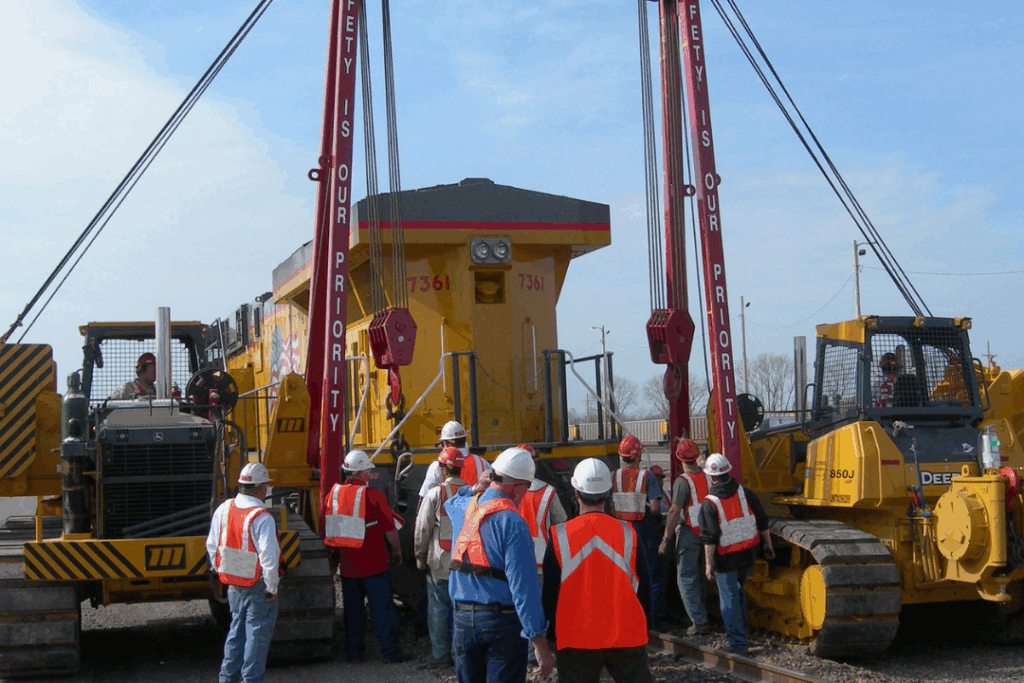
How Railroad Recovery Equipment Restores Rail Operations Faster
Keeping Rail Networks Moving When Disruptions Occur
At Midwestern Manufacturing, we understand that rail systems are the backbone of freight movement across the country. When derailments, equipment failures, or extreme weather disrupt operations, every minute of downtime carries serious financial and logistical consequences. Rail operators depend on specialized tools that can respond quickly, operate reliably, and perform under extreme conditions. That is where professional railroad recovery solutions play a critical role. Purpose-built recovery equipment helps crews restore damaged railcars, clear tracks, and return service to normal with speed, precision, and safety.
Why Rapid Recovery Matters in Rail Operations
Rail networks are designed for continuous movement. When an incident occurs, delays ripple through supply chains, affect multiple industries, and strain transportation schedules nationwide. Fast response is essential, but speed alone is not enough. Crews must also work safely and accurately to avoid further damage. Railroad recovery equipment provides the lifting power, control, and stability needed to reposition railcars, remove debris, and stabilize tracks efficiently. With the right tools in place, operators minimize downtime while protecting infrastructure and personnel during high-pressure recovery operations.
The Role of Specialized Equipment in Recovery Scenarios
Rail incidents often involve massive weights, awkward angles, and limited access. Improvised methods or general-purpose machinery increase risk and slow progress. Purpose-built recovery tools are engineered specifically for railcar weight distribution, track geometry, and confined work zones. These systems allow crews to lift, stabilize, and realign equipment with precision. In railroad recovery situations, specialized winches, lifting frames, and hydraulic systems give operators the ability to manage complex recovery tasks while maintaining control throughout the process. This precision prevents secondary damage to railcars and infrastructure.
Enhancing Safety During High-Risk Operations
Recovery environments are inherently dangerous. Unstable railcars, uneven terrain, damaged track, and time pressure create conditions where safety must be tightly controlled. Proper railroad recovery equipment reduces risk by allowing crews to work methodically instead of relying on force or guesswork. Controlled lifting, synchronized movement, and stable anchoring systems help prevent sudden shifts that could endanger workers. These practices align with safety guidance promoted by organizations such as the Federal Railroad Administration, which emphasizes hazard mitigation and operational discipline during emergency response activities.
Minimizing Damage to Rail Infrastructure
One of the biggest challenges during recovery is preventing additional damage to tracks, ties, and surrounding structures. Aggressive or poorly controlled recovery attempts can bend rails, displace ballast, or compromise alignment, leading to extended repairs and higher costs. Railroad recovery equipment allows crews to lift and reposition rolling stock gradually, preserving the integrity of the rail bed and track structure. By reducing stress on the infrastructure, operators shorten overall restoration time and reduce the need for follow-up repairs after the incident is resolved.
Improving Coordination Among Recovery Crews
Rail recovery operations often involve multiple teams working simultaneously, including operators, riggers, inspectors, and safety supervisors. Clear coordination is essential to avoid delays and hazards. Reliable recovery equipment supports better communication by providing predictable, controlled movement that all team members can anticipate. When operators know exactly how equipment will respond, crews can coordinate lifts, pulls, and stabilization efforts more efficiently. Strong coordination improves productivity and reduces confusion during complex railroad recovery operations where precision timing matters.
Adapting to Challenging Terrain and Weather Conditions
Rail incidents frequently occur in less-than-ideal environments. Remote locations, uneven ground, embankments, bridges, and adverse weather all complicate recovery efforts. Purpose-built recovery systems are designed to operate effectively in these conditions. Heavy-duty frames, adjustable anchoring options, and controlled hydraulic systems allow crews to adapt quickly to environmental challenges. Railroad recovery equipment provides the flexibility needed to stabilize loads even when conditions change unexpectedly, helping crews maintain progress without sacrificing safety or accuracy.
Supporting Faster Return to Service
The ultimate goal of any recovery operation is to restore rail service as quickly as possible without compromising safety or quality. Efficient railroad recovery minimizes downtime by enabling crews to complete tasks correctly the first time. When railcars are repositioned accurately and track alignment is preserved, operators can move directly into inspection and testing phases. This streamlined process accelerates the return to service, reduces disruption to customers, and helps maintain confidence in rail network reliability.
Reducing Long-Term Operational Costs
Every extended shutdown increases labor costs, equipment expenses, and revenue losses. Effective recovery equipment helps control these costs by reducing the duration and complexity of response efforts. Railroad recovery solutions allow crews to resolve incidents with fewer personnel, fewer corrective repairs, and less secondary damage. Over time, investing in specialized recovery equipment lowers overall operational risk and improves cost predictability for rail operators managing large networks.
Meeting Regulatory and Inspection Expectations
Railroad recovery operations must meet strict regulatory standards related to safety, documentation, and infrastructure integrity. Proper equipment supports compliance by enabling controlled, measurable recovery processes. Crews can demonstrate that railcars were handled safely, track alignment was preserved, and recovery actions followed approved procedures. This level of accountability supports oversight expectations from agencies like the National Transportation Safety Board and helps simplify post-incident reporting and review.
Strengthening Long-Term Network Reliability
Every recovery effort influences the long-term health of the rail system. Poorly executed recovery can introduce hidden damage that leads to future failures or maintenance issues. Using professional railroad recovery equipment ensures incidents are resolved without compromising future performance. Controlled lifting, precise positioning, and careful load management protect both rolling stock and infrastructure. This attention to quality strengthens overall network reliability and supports safer operations well beyond the immediate recovery event.
Equipping Crews for Confident Response
At Midwestern Manufacturing, we design recovery equipment to perform when conditions are at their worst and expectations are at their highest. Railroad recovery demands strength, precision, and reliability, and the right tools make all the difference. When crews are equipped with purpose-built solutions, they respond faster, work safer, and restore service with confidence. If you’re ready to improve response capability, reduce downtime, and protect your rail infrastructure, invest in equipment engineered for railroad recovery and put your operation back on track with confidence today.
Author: Doug G.
Comments are closed.