
Hydraulic Winch Systems: How They Work and How to Choose the Right One
If you run heavy equipment on a jobsite, sooner or later you need to move a load that will not budge on its own. A hydraulic winch is what gets it moving. It takes the pressurized fluid already flowing through your machine and turns it into steady, controllable pulling power. On pipeline spreads, recovery jobs, and heavy construction, that steadiness is the whole point: when a load has to move slowly and predictably for hours at a time, this kind of winch holds up where lighter pulling equipment quits. Here is how a hydraulic winch works, where it earns its place, how it stacks up against an electric winch, and how to pick the right unit for the job.
What Is a Hydraulic Winch?
A hydraulic winch is a drum-and-cable pulling device driven by pressurized fluid instead of an electric motor. Rather than pulling from a battery, it ties into the host machine’s hydraulic system, the same circuit that runs an excavator’s arm or a dozer’s blade. Fluid under pressure feeds a hydraulic motor, the motor turns the drum, and the drum winds or unwinds the wire rope. Because the force comes from fluid power, the winch makes high torque at low speed, which is what gives an operator smooth, deliberate control over a heavy load.
The principle is simple: pressure on a confined fluid transmits force through the whole system. That force becomes rotation at the drum, and the gearing multiplies torque so the winch pulls far more than its size suggests. That is why it holds up for continuous, heavy-duty work instead of quick, one-off pulls.
How a Hydraulic Winch Works
Every hydraulic winch relies on a handful of components working together to regulate pressure, speed, and direction:
- Hydraulic motor — converts fluid pressure into the rotational force that turns the drum.
- Drum — the spool that winds and unwinds the wire rope under load.
- Gearbox (worm or planetary) — multiplies torque and sets the balance between pulling power and line speed.
- Brake — holds the load securely and prevents unintended drum rotation.
- Control valves — regulate flow so operators can feather speed and direction precisely.
Because the power comes from the machine’s engine-driven hydraulics, the winch keeps working as long as the machine is running. There is no duty cycle to watch and no battery to drain. That is exactly why these units hold up through long shifts in dust, moisture, and vibration where other tools would tap out.
Hydraulic vs. Electric Winch: A Side-by-Side Comparison
Both types have their place. The right call comes down to load, duty cycle, and where you are working. Here is how they compare on the factors that actually matter on a jobsite.
| Factor | Hydraulic Winch | Electric Winch |
|---|---|---|
| Power source | Machine’s hydraulic system | Battery or electrical system |
| Duty cycle | Continuous, runs as long as the engine runs | Intermittent, needs cool-down to avoid overheating |
| Pulling power | High, sustained torque for heavy loads | Strong in bursts, better for lighter loads |
| Wet / submerged use | Operates reliably, even submerged | Vulnerable to water ingress |
| Line speed | Slower, steadier | Often faster |
| Best fit | Pipeline, recovery, and heavy construction | Light-duty and occasional pulls |
For light or occasional pulls, an electric winch is usually enough. For the sustained loads of pipeline construction and heavy recovery, where the pull has to run long and steady, a hydraulic winch is the one that keeps going.
Where Hydraulic Winches Are Used
Pipeline Construction
Pipeline work depends on controlled, repeatable pulling force. A hydraulic winch helps crews move pipe into position, manage tension during installation, and hold alignment across uneven right-of-way. Purpose-built pipeline winch systems are engineered to handle the specific loads and forces of pipeline construction rather than general-purpose pulling.
Recovery Operations
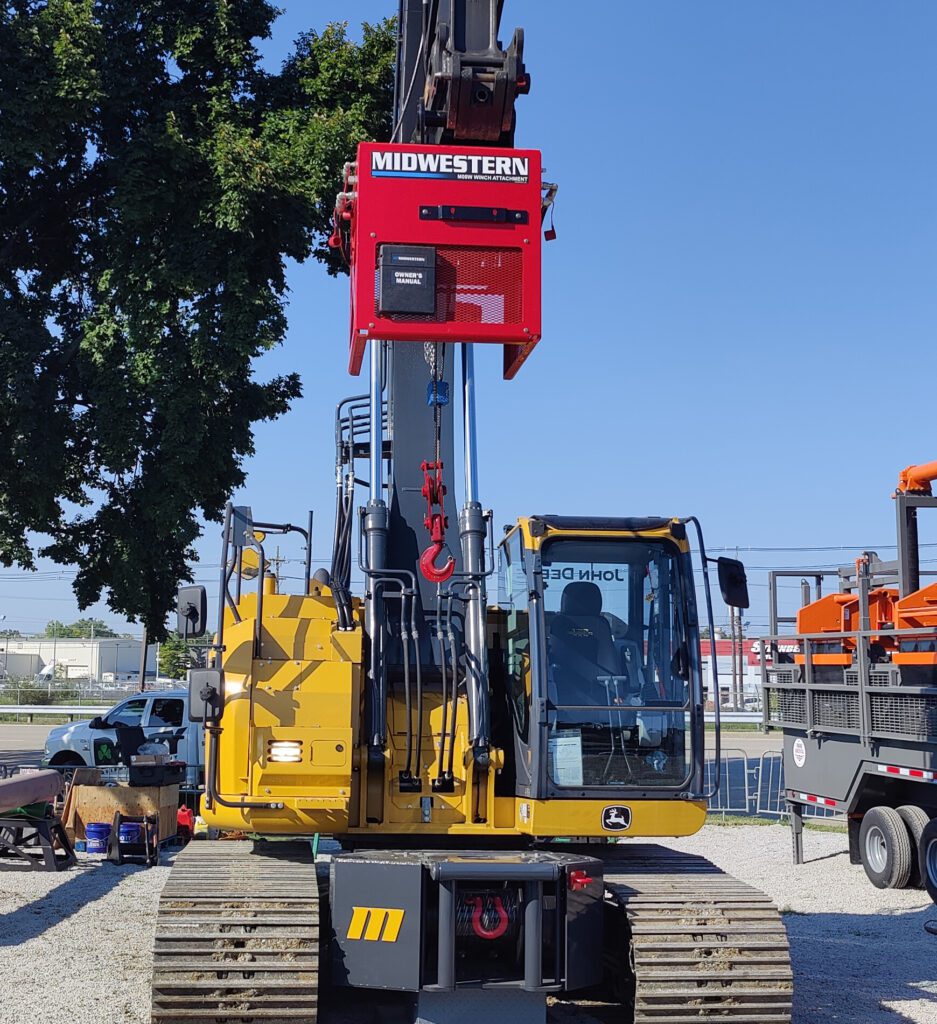
When a truck, dozer, or other machine gets stuck on remote terrain, a winch driven by the machine’s hydraulics provides the steady, high-capacity pull needed to recover it without sudden jolts or line snaps. An excavator recovery winch turns a machine already on site into a mobile recovery solution, cutting downtime when every minute counts.
Heavy Construction and Infrastructure
On sites where electrical power is limited or unreliable, hydraulic winches tie straight into existing equipment and deliver consistent torque for tensioning and pulling. Running continuously in rough conditions is where they shine, and where lighter tools overheat or quit. Any pulling operation this heavy also falls under OSHA rigging and material-handling requirements, so crews should confirm rigging, inspection, and load practices before the pull. Deciding which machine should carry the winch is its own question — our guide to sideboom vs. crane vs. excavator walks through how terrain and lift requirements should drive that call.
Midwestern Manufacturing’s Hydraulic Winch Line
Midwestern Manufacturing builds hydraulic winch attachments engineered specifically for pipeline and heavy construction work. The line covers three job-specific families:
- Recovery winches (M30W–M100W) — line pulls from 20,000 to 100,000 lb, installable on track-type or rubber-tired machines, with worm-gear or high-efficiency planetary gearing and an automatic load brake, available in single or two-speed.
- Line sagging winches (M50-DLSW, M50-TLSW) — dual and triple configurations for tensioning power transmission lines in rugged terrain, pinned directly to the dozer’s rear mount with CAN-controlled electro-hydraulics for precise, repeatable response.
- Hoist winches (M12H–M24H) — lifting attachments for excavators, compatible with quick couplers and run through the machine’s existing cab controls.
The design details are built for the field. Recovery winches tie into the machine’s auxiliary or tram hydraulic circuit and run off the existing cab controls, with bulkhead connections for straightforward installation and removal and a three-roller fairlead to guide the rope. Depending on the model, they use worm-gear or planetary gearing with an automatic load brake to hold the load. Midwestern also offers dedicated load monitoring and anti-two-block systems as operational aids for jobs where that added protection matters.
How to Choose the Right Hydraulic Winch
Selecting a winch is a matter of matching the tool to the work. A few factors drive the decision:
- Line pull capacity — identify the heaviest load you expect to move, then build in a safety margin so the winch is never run at its limit.
- Gearing type — planetary gearing offers high efficiency and speed, while worm gearing provides strong holding power; the right choice depends on the application.
- Host machine compatibility — confirm the winch ties cleanly into the machine’s auxiliary hydraulic circuit and cab controls.
- Safety features — load monitoring, automatic shutoffs, and two-block prevention are essential on heavy, high-consequence pulls.
- Wire rope condition — the rope is only as good as its inspection schedule; industry guidance from the Wire Rope Technical Board covers inspection and removal-from-service criteria worth building into your routine.
- Environment — for wet, remote, or continuous-duty work, hydraulic power is the dependable choice.
Not sure which model fits your machine and workload? Contact Midwestern Manufacturing and our team will help you match the right winch to the job.
Frequently Asked Questions
How does a hydraulic winch work?
A hydraulic winch uses pressurized fluid from a machine’s hydraulic system to drive a motor, which turns a drum to wind or unwind wire rope. Gearing multiplies torque so the winch can pull heavy loads with smooth, controlled movement. It runs as long as the host machine’s engine is running.
What is the difference between a hydraulic and an electric winch?
A hydraulic winch draws power from a machine’s hydraulic system and can run continuously without overheating, making it ideal for heavy, sustained pulling and wet or submerged conditions. An electric winch runs off a battery or electrical system, offers faster line speed, and suits lighter, occasional pulls, but its duty cycle is limited.
How much can a hydraulic winch pull?
Capacity varies by model. Midwestern Manufacturing’s recovery winch line, for example, delivers line pulls ranging from 20,000 to 100,000 lb depending on the unit and gearing configuration.
Can a hydraulic winch be used underwater?
Yes. Because it relies on a closed fluid system rather than electrical components, a hydraulic winch can operate reliably in wet conditions and even fully submerged, which is one of its key advantages over electric alternatives.
What maintenance does a hydraulic winch need?
Routine maintenance includes inspecting the wire rope for wear, checking hydraulic lines and fittings for leaks, confirming the brake and load-monitoring systems function correctly, and keeping the drum and fairlead clean. A well-maintained unit delivers many years of dependable service.
Matching the Right Winch to Your Fleet
When a job comes down to controlled force and the winch has to keep pulling shift after shift, the equipment has to be built for it. Midwestern Manufacturing has been building pipeline and construction equipment for more than 70 years, and the hydraulic winch line comes out of that field experience. If you want to talk through which model fits your machine and your workload, explore our recovery winch attachments or contact our team.
Author: Joe B.
Comments are closed.