
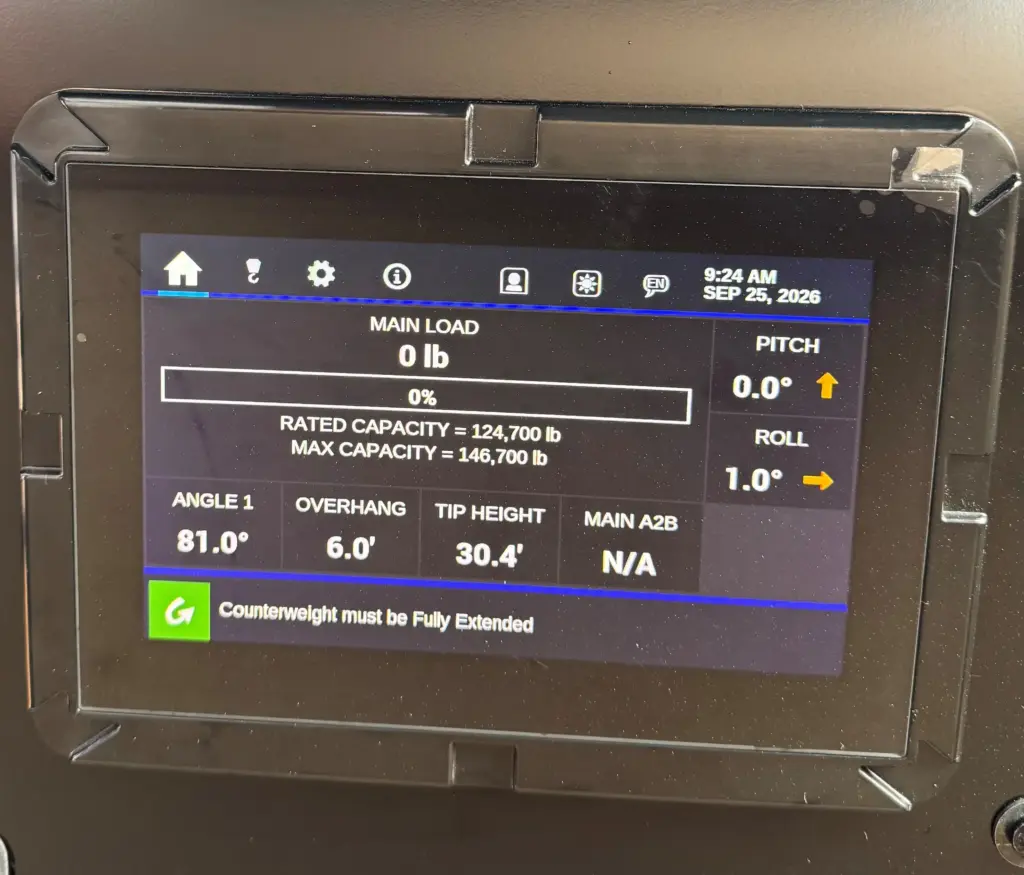
Sideboom Safety Systems: Load Monitoring and Anti-Two-Block Explained
On a sideboom or any lifting machine, the difference between a routine lift and a serious accident often comes down to the sideboom safety systems working behind the scenes. Two of the most important are load monitoring and anti-two-block protection. They guard against different hazards, but they share the same goal: keeping the load, the equipment, and the crew safe when the stakes are high. This guide explains what each system does, how they work, and why they belong on any serious lifting operation.
The Two Big Hazards on a Lift
Before the systems, it helps to understand the two failures they prevent. The first is overloading, when a machine is asked to handle more than it can safely manage for a given configuration, which can lead to tipping or structural failure. The second is two-blocking, a sudden mechanical failure that happens when the traveling block collides with the boom tip. Load monitoring addresses the first hazard, and anti-two-block protection addresses the second. Together they cover the two most dangerous things that can go wrong during a lift.
What Is Load Monitoring?
A load monitoring system, sometimes called a load moment indicator or LMI, continuously tracks a lift and tells the operator how the current load compares to the equipment’s safe rated capacity. Rather than leaving the operator to estimate whether a lift is within limits, it measures what is actually happening and provides clear, real-time feedback.
The key concept is the load moment. In lifting, the danger is not just the weight of the load, it is the weight combined with how far out it is being handled. The same load that is safe when held close can become dangerous when extended far out to the side, because the leverage working against the machine increases with distance. That is why safe capacity is never a single number, it changes constantly with the geometry of the lift. A load monitoring system tracks these changing conditions and compares the actual load against the safe capacity for that exact configuration, so the operator always knows where they stand.
How Load Monitoring Keeps Lifts Safe
A load monitoring system protects a lift in several ways at once:
- Real-time load information, so the operator sees how the load compares to capacity instead of guessing.
- Early warnings, alerting the operator as a lift approaches the safe limit, in time to adjust.
- Overload protection, flagging when a lift nears or exceeds capacity to help prevent tipping and structural failure.
- Confidence in complex lifts, giving continuous, accurate information as conditions change.
What Is an Anti-Two-Block System?
To understand anti-two-block protection, you first have to understand two-blocking. On lifting equipment, the load is raised by a line that runs over a sheave at the top of the boom and connects to a traveling block or hook below. Two-blocking happens when that traveling block is pulled all the way up until it collides with the sheave or boom tip. When the two blocks meet and the winch keeps pulling, something has to give: the line can snap, the block can break away, and the load can come crashing down. Because it happens suddenly and under enormous tension, two-blocking is one of the most dangerous events on a lift.
An anti-two-block system is designed to stop that before it happens. It detects when the traveling block is approaching the top of the boom and intervenes, either by warning the operator, stopping the function drawing the block upward, or both. Instead of relying on the operator to catch the danger in time, it provides automatic protection that acts faster than a person can react. Even skilled operators can lose track of the space at the boom tip during a complex lift, and the anti-two-block system is always watching that one specific hazard.
Why These Systems Matter Together
Load monitoring and anti-two-block protection are most powerful as a pair, because they cover different failure modes. One keeps the lift within safe capacity, the other prevents a specific mechanical collision, and together they close the two biggest gaps in lift safety. Federal OSHA standards for cranes and derricks in construction, which cover sideboom cranes, reflect how central overload awareness and safe lifting practices are to prevent accidents. Paired with sound rigging and well-trained operators, these systems form a complete safety picture where each element addresses a different risk.
No single device replaces good judgment and training. But the right sideboom safety systems give operators the margin they need when a lift gets demanding, catching the kinds of mistakes that even experienced crews can make under pressure.
Safety Engineered In From Midwestern
Midwestern Manufacturing has built pipeline equipment for the toughest jobs since 1953, and safety is engineered into our sidebooms from the ground up. Our load monitoring and anti-two-block systems provide accurate overload protection and reliable control, helping crews work safely and confidently. When the job demands equipment you can trust, Midwestern delivers.
Frequently Asked Questions
What is a load monitoring system?
A load monitoring system, also called a load moment indicator or LMI, continuously tracks a lift and shows the operator how the current load compares to the equipment’s safe rated capacity for that configuration. It provides real-time feedback so the operator is not left estimating whether a lift is within safe limits.
What is two-blocking, and what does an anti-two-block system do?
Two-blocking occurs when the traveling block or hook is drawn up until it collides with the boom tip, which can cause the line to fail and the load to drop. An anti-two-block system detects the block approaching the top and intervenes before contact, by warning the operator, stopping the upward function, or both.
What is the difference between load monitoring and anti-two-block protection?
They address different hazards. Load monitoring tracks load versus capacity to prevent overloads that cause tipping or structural failure. Anti-two-block protection prevents the traveling block from colliding with the boom tip. They are complementary systems that work best together.
What is a load moment?
A load moment combines the weight of a load with how far out it is being handled. The same weight creates more stress on the equipment the farther it is extended, which is why safe capacity changes with the geometry of the lift. Load monitoring systems track the moment, not just the weight.
Do sideboom safety systems replace operator training?
No. Load monitoring and anti-two-block systems are important safeguards, but they work best alongside proper operator training and sound rigging. Safety systems add a margin of protection, complementing good judgment rather than replacing it.
Put Safer Lifting Equipment to Work
Protecting your crew and your equipment starts with the right tools built by people who understand the work. To learn more about our load monitoring and anti-two-block systems or any of our pipeline equipment, contact Midwestern Manufacturing today.
Author: Joe B.
Comments are closed.