
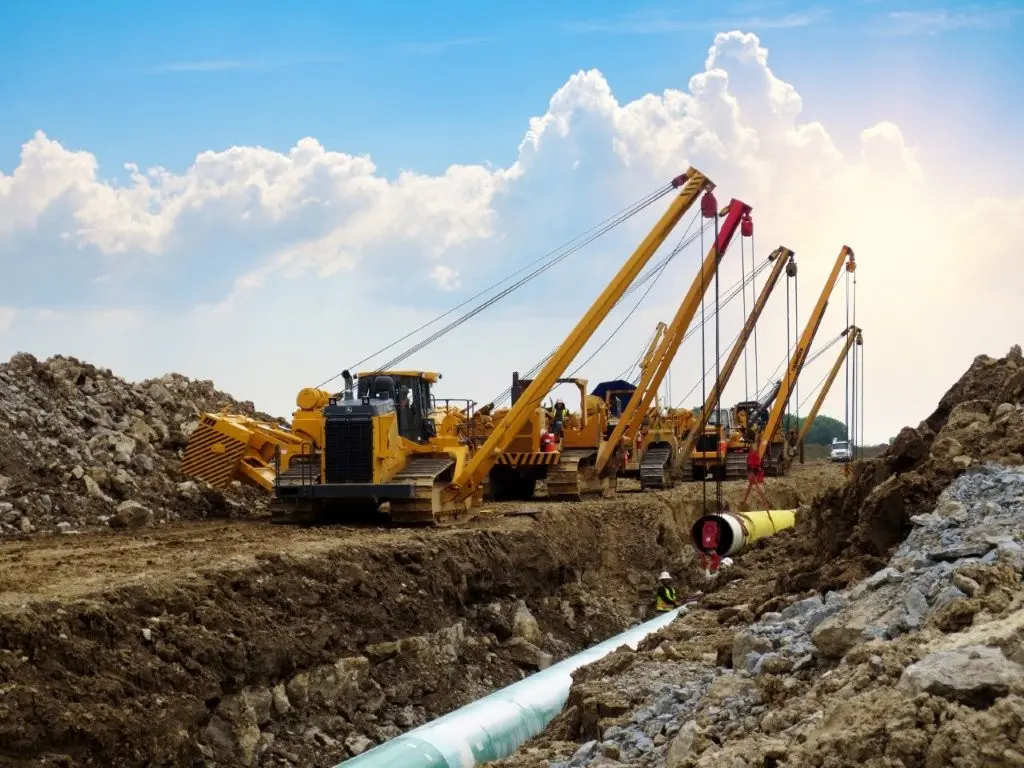
What Is a Pipeline Right-of-Way? A Contractor’s Guide
If you work in pipeline construction, you live on the right-of-way. Every decision about equipment, crew positioning, and logistics flows from the ROW: its width, its terrain, and its restrictions. But the term gets used loosely, and the details matter. Understanding what a pipeline right-of-way actually is, how it gets established, and how it shapes construction operations is foundational knowledge for anyone managing a spread.
At Midwestern Manufacturing, we have been building equipment for pipeline construction for over 70 years. Our sideboom attachments, wetdecks, and pipeline equipment all operate within the constraints of the ROW. Here is what contractors need to know.
What Is a Pipeline Right-of-Way?
A pipeline right-of-way is a strip of land over which a pipeline company holds legally granted rights to construct, operate, maintain, inspect, and repair a pipeline. It is not ownership. The landowner typically retains title to the property. It is a limited interest, formalized in a legal document called an easement, that gives the pipeline company defined rights to use that strip of land for a defined purpose.
The easement is recorded with property deeds in the relevant county and travels with the land, meaning a new property owner inherits its restrictions. The rights granted typically include the right to construct, replace, repair, operate, and inspect the pipeline. The PHMSA pipeline construction overview outlines how the ROW fits into the broader construction process, from route selection through post-construction restoration.
Permanent vs. Temporary ROW: The Distinction That Matters for Construction
Most pipeline projects involve two distinct right-of-way strips: a permanent easement and a temporary construction easement. Contractors work across both, and they have different rules.
Permanent Easement
The permanent easement is the strip that stays with the pipeline for its operational life. It is where the pipeline is buried, where aerial surveys are conducted, and where maintenance access is preserved. Permanent easement widths typically run 25 to 50 feet from the pipeline centerline, though they vary based on pipe diameter, the number of pipelines in the corridor, and specific regulatory or landowner requirements.
Within the permanent easement, landowners face ongoing restrictions. No structures, no deep-rooted plantings, and no excavation without prior clearance from the pipeline company. Normal agriculture and surface activities are generally permitted, but anything that could compromise pipeline integrity or access requires prior approval.
Temporary Construction Easement
The temporary construction easement extends beyond the permanent easement boundary and provides the working space the spread needs during construction. This is where spoil piles go, where equipment travels, and where pipe string is laid out before lowering-in. Temporary easement widths typically add another 25 to 50 feet on each side, though large-diameter pipeline projects may require more.
The temporary easement expires when construction is complete and the ROW is restored. Contractors have a defined obligation to return the temporary easement area to its pre-construction condition, including topsoil replacement, grading, and fence repair.
How Pipeline Right-of-Way Width Affects Equipment Selection
ROW width directly affects what equipment can operate, how it gets positioned, and what attachments make sense. A narrow ROW, common in agricultural or suburban areas, constrains the spread. Sidebooms need room to position properly alongside the trench, and the working radius from the machine to the pipe sets minimum spacing requirements. Wetdecks and support equipment need travel lanes. The wider and cleaner the ROW, the more flexibility the spread has to run efficiently.
This is one of the less-discussed connections between ROW conditions and equipment specification. A sideboom attachment rated for a given load at a given radius needs enough clear space beside the trench to operate safely within that rated geometry. A narrow or obstructed ROW can push the machine’s working radius out, which reduces effective lifting capacity.
Terrain Constraints and the ROW
The pipeline right-of-way does not always run through easy country. When it crosses varied terrain, the ROW creates specific challenges that affect equipment choice and operational planning.
- Side slopes: When the ROW traverses a hillside, machines work on cross-slopes that shift their center of gravity and reduce safe working capacity. Sideboom attachments rated for flat-ground performance may derate significantly on slope.
- Wetlands and soft ground: Low-lying, saturated right-of-ways require equipment configured for low ground pressure. Wetdeck configurations allow sideboom operations in swamp and marsh terrain that would bog down standard crawlers.
- Wooded ROW: Cleared but recently wooded right-of-ways present stump, root, and uneven ground challenges that affect equipment travel and positioning.
- Rocky terrain: Rocky ROW can damage undercarriages and pipe coating, and may require screened backfill or padding material to protect the line during lowering-in.
How terrain interacts with ROW conditions is part of the planning discussion every spread foreman has before mobilization. Our post on how to plan a pipeline spread covers how terrain factors into equipment selection and fleet sizing decisions.
ROW Restrictions Contractors Need to Know
Working within the pipeline right-of-way during construction means operating under a defined set of restrictions. Most of these exist to protect the pipeline, the landowner, and the crew. Contractors new to a specific project should review the easement terms before mobilizing.
Common restrictions include:
- No structures of any kind within the permanent easement without prior written consent
- No grading changes that alter drainage patterns without approval
- Fencing requirements covering both the obligation to maintain existing fences during construction and to restore them afterward
- Restrictions on access points into the ROW, particularly on agricultural land
- Environmental restrictions near wetlands, waterways, and sensitive habitats that may impose additional equipment requirements
The Federal Energy Regulatory Commission (FERC) regulates interstate natural gas pipeline construction and sets requirements for ROW acquisition and restoration. State-level agencies regulate intrastate lines and requirements vary. Understanding which regulatory framework applies to a given project is the starting point for understanding ROW obligations.
Post-Construction ROW Restoration
Construction ROW is not just an acquisition challenge. It is a restoration obligation. Once the spread has passed, the temporary construction easement must be restored to pre-construction condition within the timeframe specified in the easement agreement. That typically means:
- Topsoil placed back in its original depth and sequence
- Grading restored to original contours to preserve drainage
- Fences repaired or replaced
- Seeding or re-vegetation per the landowner’s or agency’s requirements
- Rock and debris removal
Failure to restore the ROW properly creates legal liability and damages relationships with landowners on future projects. It is also an area where spread planning and equipment selection have a direct downstream effect. The more carefully a spread moves through the ROW, the less remediation work follows behind it.
Midwestern Equipment and the ROW
Midwestern Manufacturing has spent over 70 years building equipment that operates on real pipeline right-of-ways, from wide-open agricultural corridors to narrow wooded easements, from dry flat terrain to swamps and soft-ground river crossings. Our sideboom pipelayer attachments for CAT and John Deere platforms, our wetdeck configurations for soft-ground operations, and our full line of pipeline products and supplies are all built with the constraints of the real-world ROW in mind.
If you are planning a project and want to talk through equipment for specific ROW conditions, contact our team.
Frequently Asked Questions
What is a pipeline right-of-way?
A pipeline right-of-way (ROW) is a legally granted strip of land over which a pipeline company holds defined rights to construct, operate, maintain, and inspect a pipeline. It is formalized as an easement recorded with property records. The landowner retains title but agrees to restrictions on land use within the ROW corridor.
What is the typical width of a pipeline right-of-way?
Permanent pipeline easements typically run 25 to 50 feet wide, measured from the pipeline centerline. Temporary construction easements add another 25 to 50 feet during active construction. Widths vary based on pipe diameter, number of pipelines in the corridor, terrain, and regulatory requirements.
What is the difference between a pipeline easement and a pipeline right-of-way?
The terms are often used interchangeably. Technically, the easement is the legal document that grants the rights, and the right-of-way is the physical strip of land those rights apply to. In pipeline construction, both terms typically refer to the same corridor of land.
How does pipeline right-of-way width affect equipment operations?
ROW width directly affects how equipment is positioned, how much working space is available for spoil piles and pipe string, and what working radius sidebooms must operate at. Narrow ROW can push sideboom operating radius out, reducing effective lifting capacity. Terrain constraints within the ROW, including slopes, soft ground, and obstacles, affect machine selection and spread planning.
Does Midwestern Manufacturing build equipment for challenging ROW conditions?
Yes. Midwestern builds sideboom pipelayer attachments for CAT and John Deere crawlers across lifting classes from 10,000 to 220,000 lb, and wetdeck configurations for low-ground-pressure operations in soft or wet terrain. Contact us to discuss your ROW conditions and project requirements.
Author: Joe B.
Comments are closed.