
How to Plan a Pipeline Spread: A Contractor’s Guide to Sideboom Fleet Sizing
Knowing how to plan a pipeline spread is one of those things experienced contractors carry around in their heads—built up over years of projects, terrain, and hard lessons on the right-of-way. But there’s surprisingly little written down about it in plain language.
This guide walks through the variables that actually drive spread planning decisions, with a focus on the sideboom fleet: how many machines, what class, and how the fleet fits into the broader spread operation.
What a Pipeline Spread Is — and Why the Sideboom Fleet Defines It
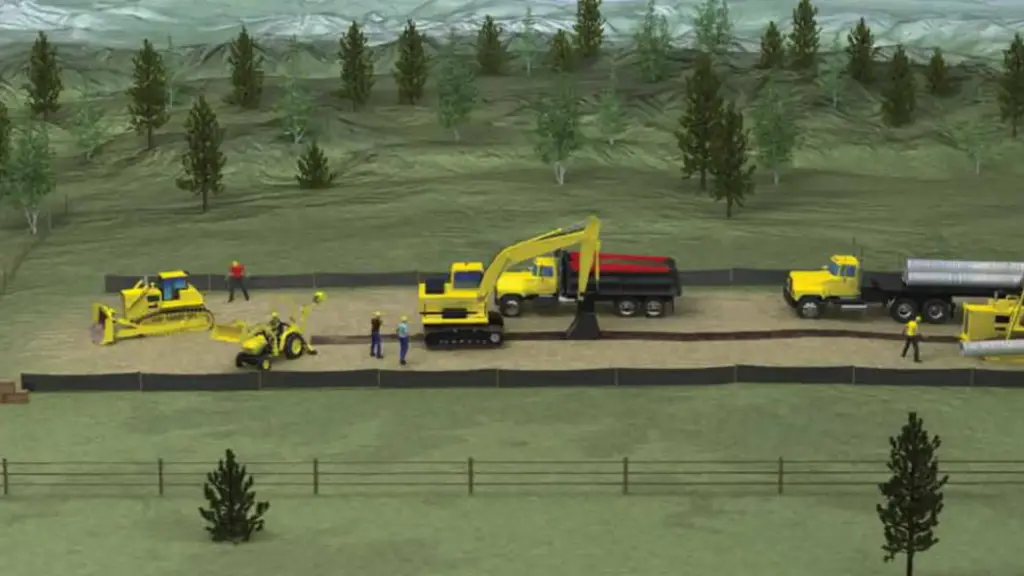
A pipeline spread is the complete assembly of equipment, crew, and support resources moving down the right-of-way together as a coordinated unit. Think of it as a traveling production line.
At the front, ditching equipment opens the trench. Pipe stringing, bending, and welding crews work the string. Then the lowering-in crew — the sidebooms — lifts the completed pipe string and places it into the trench. Backfill and cleanup follow behind. The whole operation advances continuously, joint by joint.
The Pipeline & Gas Journal has documented this process across decades of large-diameter projects. The fundamentals haven’t changed: when contractors think about how to plan a pipeline spread, the sideboom count is the number everything else gets built around. Too few machines and the lowering-in operation becomes the bottleneck. Too many and you’re moving equipment that isn’t earning its keep.
The Variables That Actually Determine Sideboom Count
There’s no formula that produces a definitive machine count. What experienced contractors do is work through a set of variables — each one narrows the answer.
1. Pipe Diameter and Weight Per Joint
This is always the starting point. The bigger and heavier the pipe, the more lift capacity the spread needs — and often the more machines are required to distribute that load safely along the string.
Small-diameter distribution pipe on a straightforward right-of-way can often be handled by one sideboom per lift point, sometimes with smaller-class attachments. Large-diameter transmission pipe — 36″, 42″, 48″ and above — is a different conversation. A 40-foot joint of 42″ pipe with wall thickness and coating can weigh 30,000 to 50,000 lbs or more depending on spec. That weight, combined with the lift radius required over a wide trench, puts real demands on each machine’s rated capacity. Matching the right lifting class to the pipe spec is the first decision in any spread build.
2. Rated Capacity at Working Radius
This is where contractors sometimes get into trouble. A sideboom’s nameplate capacity is not its working capacity at every boom extension. At full boom extension over a wide trench, effective lift capacity can drop significantly — sometimes to a fraction of the rated load. The key is knowing the actual capacity at the working radius your trench width and pipe diameter require.
A properly engineered sideboom attachment gives you defined capacity at each boom position — not a single nameplate number that may not apply to your actual lift geometry. This is one reason OSHA 29 CFR 1926.1440 and ASME B30.14 require load ratings to be established per configuration, not just as a single maximum figure. Understanding that distinction before the spread mobilizes is essential.
3. Number of Lift Points and Spacing
For most lowering-in operations, the pipe string is supported at multiple lift points simultaneously. The number of lift points needed depends on the pipe’s stiffness, weight, and the bending stress limits of the pipe spec.
A common working range for large-diameter transmission pipe is one sideboom every 40 to 80 feet of string — though the specific spacing for any project should be engineered for that pipe’s wall thickness, grade, and coating weight. The principle: enough lift points that bending stress between supports stays within spec, and each machine’s load stays within its rated capacity at the actual working radius.
More lift points means more machines. Tighter spacing may also be required in challenging terrain — side slopes, soft ground, or limited right-of-way width that restricts how machines can be positioned.
4. Terrain and Right-of-Way Conditions
Flat, open right-of-way is the easiest operating environment for a spread. But pipelines don’t always run through easy terrain. Side slopes, soft or wet ground, rocky ground, and crossing features all affect sideboom selection and count in different ways.
Side slopes demand more from a sideboom’s stability engineering — machines working on a cross-slope are operating with a shifted center of gravity that reduces effective safe working capacity. Soft ground raises questions about ground pressure and track flotation. Difficult terrain may also slow the spread’s production rate, which affects how the overall fleet is sized relative to project timeline. Some contractors run additional machines specifically to maintain production rate through difficult sections — using fleet size as a buffer against terrain variability.
5. Production Rate Requirements
A spread has a target: a certain number of joints per day, which translates to miles per week. That target — set by the project schedule and contract — works backward into fleet sizing.
If the lowering-in crew is the bottleneck, adding a machine can increase throughput. If welding is the bottleneck, more sidebooms won’t help. Understanding which operation limits the spread’s production rate is essential before deciding whether more equipment solves the problem.
This is why spread planning is done as a system, not machine by machine. The right number of sidebooms is the number that keeps the lowering-in operation paced with the welding and stringing crews — not more, not less.
6. Redundancy and Breakdown Buffer
Pipeline spreads run in remote locations, often far from equipment dealers and service infrastructure. A mechanical issue that takes a sideboom out of service can stall the entire lowering-in operation. Experienced contractors build in redundancy — typically at least one spare machine in the spread, sometimes more on large-diameter or long-duration projects. On a project running 10 active sidebooms, running without a spare is a risk most project managers won’t take. Recovery winch attachments and load monitoring and anti-two-block systems also factor into how spreads are equipped for uptime and operator safety on extended projects.
A Rough Framework: What Spreads Actually Look Like
Without claiming these as hard rules — because project conditions vary too much for that — here is how spread sideboom counts tend to shake out in practice when planning a pipeline spread:
- Small-diameter spreads (under 16″): Typically 2 to 4 sidebooms in the lowering-in crew, often lighter-class attachments on smaller crawlers.
- Medium-diameter spreads (16″ to 30″): Commonly 4 to 6 active machines, depending on pipe weight, coating, and terrain.
- Large-diameter spreads (30″ to 48″ and above): Often 6 to 12 or more machines in the lowering-in crew, with at least one spare. Some major transmission projects run larger fleets still.
Each of those ranges shifts up in difficult terrain, shifts down on easy, well-accessed right-of-way with fast production rates. They also shift based on whether machines are working close to rated capacity or with meaningful headroom — the latter being safer and generally preferable on long-duration projects.
Selecting the Right Class of Sideboom for Each Position
Spread planning isn’t just about how many machines — it’s also about which class goes where. On large-diameter spreads, it’s common to run different lifting classes in different positions. The machines at the ends of the string, where the pipe is being picked up from the skids, may need more capacity than the machines supporting the middle of an already-suspended string.
Midwestern’s CAT crawler pipelayer attachments and John Deere crawler pipelayer attachments span lifting classes from 10,000 lb to 220,000 lb — which means a spread can be spec’d with purpose-built machines at each position rather than defaulting to the same class throughout. Mixing classes intelligently is both more economical and more capable than running every position at maximum rating.
If you’re still working through whether sidebooms are the right tool for a specific application, our breakdown of sideboom vs. crane vs. excavator performance on real jobsites covers where each approach wins and where it falls short.
The Role of Support Equipment in Spread Efficiency
Sideboom count gets most of the attention in spread planning, but it doesn’t exist in isolation. The machines working alongside the lowering-in crew directly affect how the sidebooms perform and how long the spread can run at pace.
Recovery winch capacity matters when something goes wrong — and on a long spread, something always eventually does. A machine that needs to be extracted without shutting down the whole string operation needs the right recovery winch rating for the load. Similarly, heavy-duty winch systems play a role in some spread configurations where large-diameter pipe handling requires supplemental pull capacity beyond what the sideboom’s primary hoist provides.
Getting the Spec Right Before Equipment Ships
The time to work through how to plan a pipeline spread — sideboom count, lifting class, terrain considerations, and support equipment — is before the spread mobilizes, not after the first lowering-in day reveals a gap.
Midwestern has been building pipeline spread equipment for over 70 years. We understand how spreads are put together and how the variables interact. If you’re planning a project and working through the fleet build, contact our team — we’re happy to work through the specifics with you.
Frequently Asked Questions
How do you plan a pipeline spread?
Planning a pipeline spread starts with the pipe specification — diameter, wall thickness, weight per joint, and coating. From there, you determine the lifting capacity required at the actual working radius, the number of lift points needed to keep bending stress within spec, and how many sidebooms that translates to. Terrain, production rate targets, and redundancy requirements then shape the final fleet size. The sideboom attachment class is selected based on each machine’s position in the string, not just a single capacity number applied across the whole spread.
How many sidebooms does a pipeline spread need?
It depends on pipe diameter, weight, number of required lift points, terrain, and production rate targets. Small-diameter spreads commonly run 2 to 4 sidebooms. Medium-diameter spreads typically run 4 to 6. Large-diameter transmission spreads often run 6 to 12 or more active machines, plus at least one spare. These ranges shift based on pipe weight, trench width, terrain difficulty, and how the spread is paced relative to the welding crew.
What is pipeline spread equipment?
Pipeline spread equipment refers to the full fleet of machinery and crew deployed together to construct a section of pipeline. A spread typically includes ditching equipment, pipe stringing and bending machines, welding equipment and crew, sideboom pipelayers for lowering-in operations, backfill equipment, and cleanup machines — all moving down the right-of-way in a coordinated sequence.
Should all sidebooms on a spread be the same lifting class?
Not necessarily. Machines at the ends of a suspended string — where the pipe is being picked up from skids — often need more capacity than machines supporting the middle of an already-suspended string. Midwestern builds sideboom attachments from 10,000 lb to 220,000 lb lifting capacity, specifically so spreads can be configured with the right class at each position.
How does terrain affect pipeline spread planning?
Difficult terrain — side slopes, soft ground, rocky right-of-way, or limited access — typically drives sideboom count up for two reasons: adverse conditions reduce effective safe working capacity on each machine, requiring more machines to distribute the load; and terrain slows production rate, so more machines may be needed to maintain schedule through challenging sections.
Does Midwestern Manufacturing help with pipeline spread planning?
Yes. Midwestern has over 70 years of experience building pipeline spread equipment and works with contractors on fleet planning for specific projects. Contact our team to discuss your project’s pipe spec, terrain, and timeline.
Author: Joe B.
Comments are closed.