
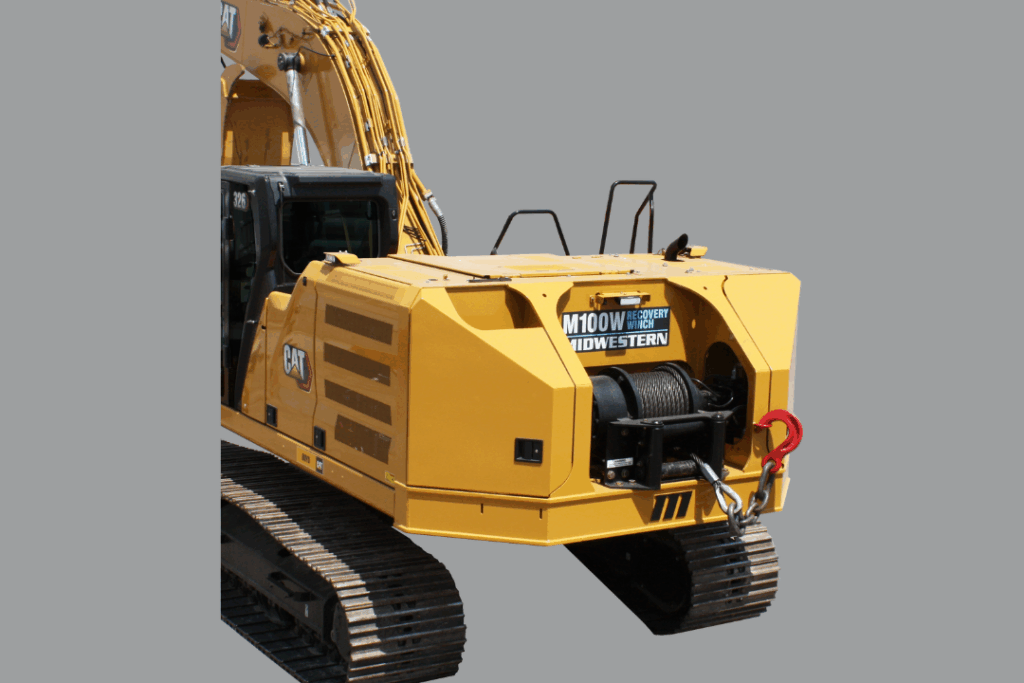
When to Use an Excavator Mounted Winch on Job Sites
Expanding the Capabilities of Standard Excavators
At Midwestern Manufacturing, we design equipment to help crews get more productivity, control, and safety out of the machines they already rely on every day. Excavators are among the most versatile pieces of equipment on any job site, but certain tasks require controlled pulling power rather than lifting or digging. That’s where an excavator mounted winch becomes a valuable addition. By integrating winching capability directly onto an excavator, crews gain a flexible solution that supports pulling, positioning, recovery, and tensioning tasks without introducing additional machines into the work zone.
What an Excavator Mounted Winch Is Designed to Do
An excavator mounted winch is engineered to work as an extension of the excavator rather than a standalone piece of equipment. It integrates with the machine’s hydraulic system and provides controlled pulling force through a compact, jobsite-ready design. This setup allows operators to use a single platform for multiple tasks, reducing complexity and improving efficiency.
Typical functions include:
- Controlled pulling of materials or equipment
- Assisting with positioning heavy components
- Supporting recovery and stabilization tasks
- Managing tension during installation or alignment work
- Operating in confined or uneven work areas
This versatility makes winch-equipped excavators especially valuable on complex or space-restricted jobsites.
When Space and Access Are Limited
Many jobsites don’t allow room for multiple machines operating at once. Urban construction, utility work, pipeline corridors, and infrastructure repair projects often require crews to work in tight spaces where maneuverability is critical. An excavator mounted winch allows crews to perform controlled pulling tasks without bringing in a separate winch truck or skid-mounted system.
Benefits in confined environments include:
- Reduced equipment congestion
- Easier positioning in narrow corridors
- Fewer access requirements for additional machines
- Improved safety through simplified workflows
By consolidating functions into one machine, crews can work more efficiently without sacrificing control.
Supporting Controlled Pulling Instead of Lifting
Excavators are often used for lifting, but lifting is not always the safest or most effective way to move materials. Pulling with a winch provides better load control in many situations, especially when materials need to be guided along the ground or through obstacles.
An excavator mounted winch is particularly useful when:
- Loads must be pulled rather than lifted
- Ground-level movement reduces risk
- Alignment is critical during placement
- Terrain makes lifting unstable or unsafe
This controlled pulling capability reduces load swing and minimizes stress on both equipment and materials.
Improving Safety Through Predictable Load Movement
Safety improves when equipment behaves predictably. Winching allows operators to control speed, tension, and direction more precisely than many lifting methods. Smooth, gradual movement reduces shock loading and unexpected shifts that can endanger crews.
Safety advantages include:
- Better control over load direction
- Reduced risk of sudden movement
- Improved communication between operators and ground crews
- Safer operation near trenches, slopes, or obstacles
These controlled handling practices align with material-handling principles emphasized by the Occupational Safety and Health Administration, which highlights proper equipment selection and controlled load movement.
Ideal for Recovery and Stabilization Tasks
Jobsite recovery situations require equipment that can adapt quickly to changing conditions. Whether stabilizing a stuck machine, repositioning materials, or assisting with recovery operations, an excavator mounted winch provides dependable pulling force without the need for additional specialized recovery equipment.
Common recovery-related uses include:
- Assisting stuck equipment in soft ground
- Repositioning materials after shifting or collapse
- Stabilizing loads during corrective operations
- Supporting emergency response tasks
Because the winch is already integrated into the excavator, crews can respond quickly without waiting for additional equipment.
Enhancing Efficiency on Multi-Task Jobsites
On many projects, crews are required to switch between tasks frequently. Digging, grading, pulling, positioning, and recovery may all be part of the same workday. Adding winching capability to an excavator reduces downtime associated with changing machines or attachments.
Efficiency gains often include:
- Faster task transitions
- Reduced equipment transport requirements
- Fewer operators needed on site
- Improved utilization of existing machines
By maximizing the excavator’s role, crews maintain productivity without increasing jobsite complexity.
Adapting to Uneven Terrain and Challenging Conditions
Excavators are designed to operate on uneven ground, making them ideal platforms for winching in difficult terrain. Slopes, soft soil, rocky surfaces, and remote locations often limit the effectiveness of wheeled or fixed winch systems. An excavator mounted winch allows operators to reposition the machine for optimal pulling angles while maintaining stability.
Terrain-related benefits include:
- Better traction and positioning on slopes
- Improved control in soft or unstable ground
- Greater flexibility when obstacles limit access
- Reduced reliance on temporary anchors
This adaptability keeps operations moving even when site conditions are less than ideal.
Reducing Equipment and Transportation Costs
Adding winching capability to an excavator can reduce the need for separate winch machines, trailers, and transport logistics. Instead of mobilizing additional equipment, crews can rely on a single machine to perform multiple functions.
Cost-related advantages include:
- Lower equipment rental or purchase costs
- Reduced transportation and mobilization expenses
- Fewer maintenance schedules to manage
- Simplified jobsite planning
Over the life of a project, these savings can be significant.
Integration with Existing Excavator Systems
An excavator mounted winch is designed to integrate with the excavator’s hydraulic and control systems, ensuring smooth, reliable operation. Proper integration eliminates the need for improvised connections that introduce weak points or safety concerns.
Integration benefits include:
- Consistent hydraulic performance
- Improved operator control
- Reduced wear on components
- Simplified inspection and maintenance
A well-integrated system performs better and lasts longer under demanding use.
Selecting the Right Winch Configuration
Not every application requires the same winch capacity or configuration. Load size, pulling distance, terrain, and duty cycle all influence the right setup. Choosing the correct excavator mounted winch ensures crews achieve the control they need without overstressing equipment.
Key selection factors include:
- Maximum load requirements
- Line speed and control needs
- Environmental exposure
- Frequency of winching tasks
- Compatibility with the excavator model
Matching the winch to real-world conditions delivers safer and more efficient results.
Designed to Work Where Crews Need It Most
Excavator-mounted winching gives crews flexibility, control, and efficiency without adding unnecessary equipment to the jobsite. An excavator mounted winch allows operators to handle pulling, positioning, and recovery tasks with confidence using a machine they already trust. At Midwestern Manufacturing, we engineer winch solutions that integrate seamlessly with excavators and perform reliably in demanding environments, and when your jobsite requires controlled pulling power, efficient workflows, and dependable performance, choose equipment built to expand capability and put engineered winching solutions to work today.
Author: Joe B.
Comments are closed.