
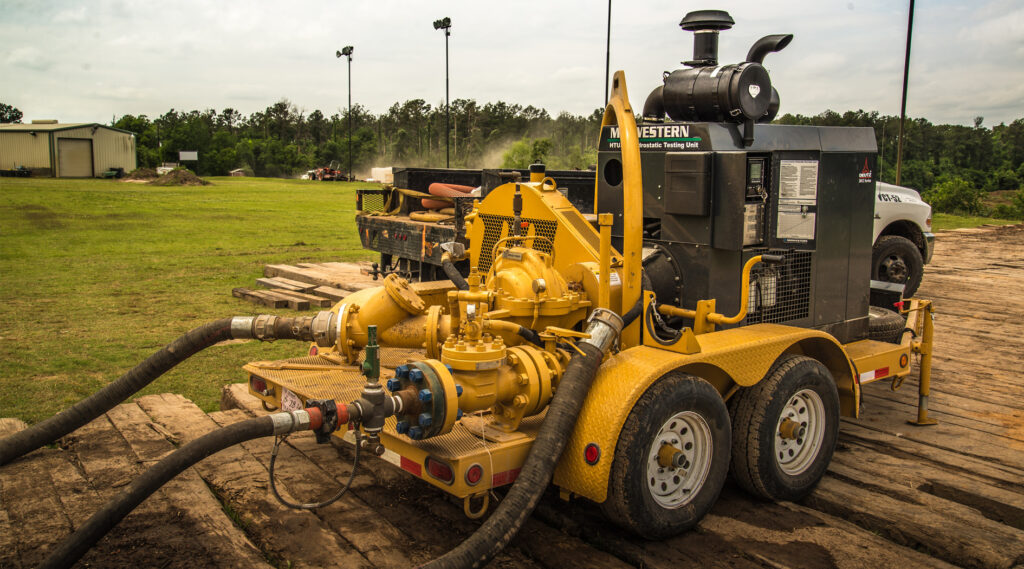
What Are Hydrostatic Testing Units and What Are They Used For?
In industries where pressure systems are part of daily operations, safety and reliability are non-negotiable. From pipelines to pressure vessels, even the smallest weakness can lead to serious operational issues or safety risks.
That’s why testing methods are essential before equipment is put into service. A common question we hear is, “what are hydrostatic testing units and why do they matter so much in industrial applications?”
At Midwestern Manufacturing, we focus on precision-engineered solutions that support safe, efficient, and dependable operations.
Understanding Hydrostatic Testing Units
To clearly answer what are hydrostatic testing units, start with the core idea.
Hydrostatic testing units are systems used to test the strength and integrity of pressure-containing equipment by filling it with liquid and applying controlled pressure.
In simple terms: they verify that equipment can handle pressure safely before it’s used in the real world.
These systems are commonly used to test:
- Pipelines
- Tanks
- Boilers
- Pressure vessels
According to the Occupational Safety and Health Administration (OSHA), proper pressure testing is critical for maintaining safe working environments.
How Hydrostatic Testing Works
The process is simple in concept but precise in execution.
Fill the system
The component is filled completely with water or another testing liquid. Air is removed to improve safety and accuracy.
Apply pressure
The hydrostatic testing unit increases internal pressure beyond normal operating levels.
Monitor performance
Technicians check for pressure drops, leaks, or visible deformation.
Evaluate results
- Stable pressure = pass
- Pressure loss or damage = fail
This controlled process delivers clear, measurable results you can trust.
Why Hydrostatic Testing Is Critical
When asking “what are hydrostatic testing units?” It’s just as important to understand why they matter. Pressure systems don’t always fail visibly. Small defects like micro-cracks or weak welds can go unnoticed until they cause serious problems.
Hydrostatic testing helps catch those issues early.
Key advantages include:
- Reduced risk of equipment failure
- Improved workplace safety
- Lower long-term maintenance costs
- Prevention of environmental hazards
Industry standards from the American Society of Mechanical Engineers (ASME) reinforce the importance of proper testing for compliance and reliability.
Where Hydrostatic Testing Units Are Used
Hydrostatic testing units play a role across multiple industries. Anywhere pressure systems exist, testing is essential.
Common applications include:
- Oil and gas pipelines
- Manufacturing facilities
- Municipal water systems
- Rail and transportation equipment
Above all, if a system operates under pressure, it needs to be tested. Understanding what hydrostatic testing units are highlights just how critical they are to modern infrastructure and industry.
Key Benefits at a Glance
Hydrostatic testing offers several clear advantages:
Safer Testing Method
Water reduces the risk of explosive failure compared to gas testing.
Highly Accurate Results
Even small leaks or weaknesses can be detected quickly.
Supports Compliance
Testing helps meet industry regulations and safety standards.
The National Institute of Standards and Technology (NIST) emphasizes the importance of precise measurement in maintaining quality and safety.
What Equipment Gets Tested?
Hydrostatic testing units are used on a wide range of components that must withstand pressure.
Most commonly tested equipment includes:
- Pipelines
- Pressure vessels
- Boilers
- Cylinders
- Valves
Each of these components plays a critical role in system performance. This is another reason why understanding why hydrostatic testing units are essential for industrial decision-makers.
The Importance of Precision Engineering
At Midwestern Manufacturing, precision drives everything we build.
Hydrostatic testing units must deliver consistent and repeatable results. That requires:
- Accurate pressure control
- Durable system design
- User-friendly operation
Well-built equipment leads to more reliable testing—and more reliable systems overall.
Our focus is on providing solutions that perform in demanding environments while supporting long-term operational success.
Long-Term Value of Routine Testing
Hydrostatic testing isn’t just a one-time requirement. It’s part of a smart maintenance strategy.
Routine testing helps:
- Identify wear before failure occurs
- Reduce unexpected downtime
- Extend equipment lifespan
Preventive testing is always more cost-effective than reactive repairs.
When businesses understand what hydrostatic testing units are, they gain a powerful tool for maintaining performance and avoiding disruptions.
Why It Matters for Your Operation
Pressure systems are at the heart of many industrial operations. When they fail, the consequences can be serious, this is why hydrostatic testing units are of importance. They provide a reliable way to confirm system integrity before problems occur.
They help protect:
- Your equipment
- Your workforce
- Your bottom line
At Midwestern Manufacturing, we design solutions that prioritize safety, precision, and performance in every application.
Take the next step by implementing hydrostatic testing solutions that strengthen your systems and keep your operations running at their best. Contact us today to learn more or get a quote.
Frequently Asked Questions
- What are hydrostatic testing units used for?
A. They are used to test pressure-containing equipment by filling it with liquid and applying pressure to check for leaks and structural integrity. - Why is hydrostatic testing safer than gas testing?
A. Liquids do not store energy like gases, which reduces the risk of dangerous failures during testing. - What industries use hydrostatic testing units?
A. Oil and gas, manufacturing, water infrastructure, and transportation industries all rely on hydrostatic testing. - How often should hydrostatic testing be performed?
A. It depends on regulations and equipment type, but many systems require periodic testing as part of routine maintenance.
Author: Joe B.
Comments are closed.