
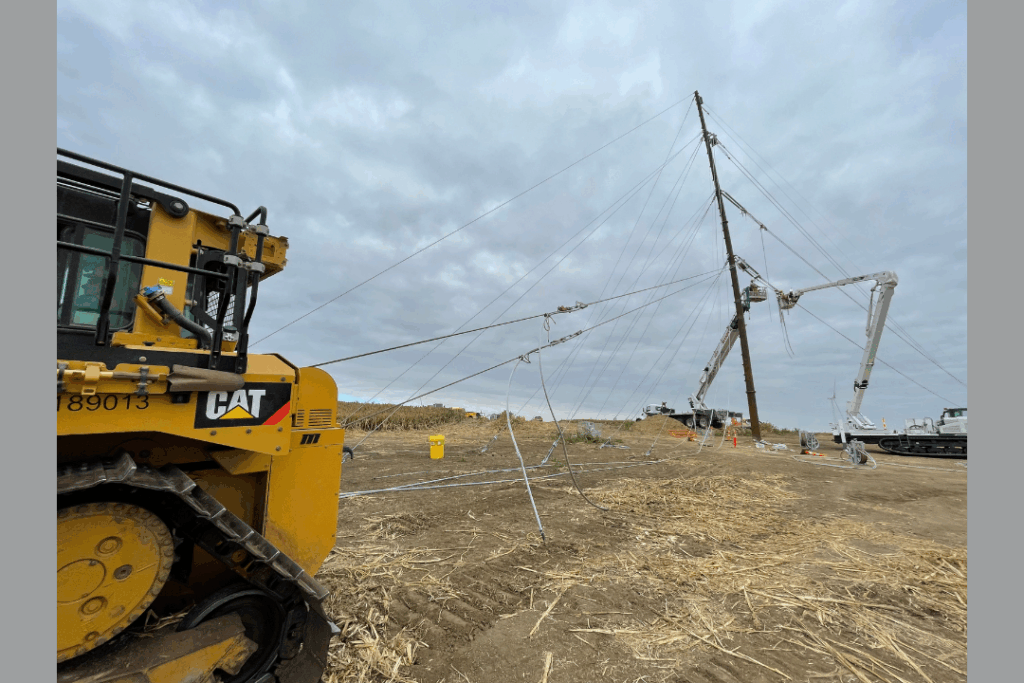
Line Handling Equipment That Improves Job Site Efficiency
Why Efficient Line Handling Matters on Modern Jobsites
At Midwestern Manufacturing, we design equipment for crews who work in environments where efficiency directly impacts safety, cost, and project timelines. Whether crews are managing cables, wire rope, conductors, or tensioned lines, controlled handling is essential to maintaining smooth operations. Poorly managed lines can slow progress, increase risk, and lead to costly rework. That’s why line handling equipment plays a critical role in improving job site efficiency by providing control, consistency, and predictability during demanding operations.
The Role of Line Handling in Heavy-Duty Operations
Line handling is involved in far more tasks than many people realize. From positioning materials to managing tension and guiding movement, properly handling lines is essential across construction, infrastructure, energy, rail, and industrial environments. Effective line handling allows crews to control force, direction, and movement without relying on excessive manual effort.
Common line handling tasks include:
- Guiding cables or wire rope during pulling operations
- Managing tension during installation or alignment
- Supporting lifting, positioning, or lowering tasks
- Controlling movement in recovery or stabilization scenarios
- Coordinating load movement between machines and crews
Each of these tasks benefits from equipment designed specifically to manage lines safely and efficiently.
Why Manual Line Handling Limits Productivity
Relying too heavily on manual handling introduces inefficiencies and safety risks. Lines under tension can behave unpredictably, and even small mistakes can lead to delays or injuries. Manual methods also slow progress by requiring more personnel and frequent adjustments. Purpose-built line handling equipment reduces these limitations by allowing crews to control movement mechanically rather than physically.
Key productivity improvements include:
- Faster task completion with fewer workers
- Reduced need for repeated repositioning
- More consistent movement and alignment
- Less downtime caused by mismanaged lines
By minimizing manual intervention, crews maintain momentum while reducing fatigue and risk.
Improving Safety Through Controlled Line Movement
Safety and efficiency go hand in hand when handling tensioned lines. Sudden movement, slack buildup, or uneven tension can create hazardous conditions for crews working nearby. Equipment designed for line handling provides smooth, gradual control that reduces the likelihood of unexpected shifts.
Safety-focused benefits include:
- Controlled starts and stops that reduce shock loading
- Predictable tension that prevents snap-back
- Improved visibility and communication between operators and ground crews
- Reduced physical strain on workers
These controlled handling practices align with material-handling principles emphasized by the Occupational Safety and Health Administration, which highlights the importance of using appropriate equipment to manage loads safely.
Supporting Efficiency on Complex Jobsites
Large and complex jobsites require coordinated movement between multiple crews and machines. When line behavior is inconsistent, coordination breaks down and delays multiply. Well-designed line handling equipment improves efficiency by creating predictable workflows that crews can plan around.
Efficiency gains often come from:
- Smoother coordination between operators and rigging crews
- Fewer interruptions caused by line instability
- Improved accuracy during placement or alignment
- Faster transitions between job phases
Predictable line behavior allows teams to work with confidence instead of reacting to problems as they arise.
Adapting to Challenging Terrain and Conditions
Jobsites rarely offer ideal conditions. Uneven ground, tight spaces, weather exposure, and limited access all affect how lines behave during operation. Equipment designed for line handling helps crews maintain control even when conditions are less than ideal.
Adaptability advantages include:
- Stable performance on slopes or uneven surfaces
- Better control in confined or low-visibility areas
- Reduced risk of line binding or snagging
- Improved handling despite environmental changes
This adaptability keeps operations moving forward even when the jobsite introduces unexpected challenges.
Integration with Other Jobsite Equipment
Line handling does not happen in isolation. It must integrate seamlessly with winches, cranes, excavators, rollers, and anchoring systems. Line handling equipment designed for integration improves overall system performance and reduces the need for improvised solutions.
Integration benefits include:
- Better load transfer between machines
- Reduced wear on cables and attachment points
- Improved system balance and alignment
- Simplified inspection and maintenance procedures
When equipment works together as intended, both safety and productivity improve across the jobsite.
Protecting Lines, Materials, and Infrastructure
Improper handling can damage lines, coatings, and surrounding structures. Abrasion, twisting, and excessive tension shorten service life and increase replacement costs. Purpose-built handling solutions protect assets by guiding lines smoothly and maintaining consistent tension.
Protection-related benefits include:
- Reduced abrasion and surface damage
- Improved line alignment during movement
- Lower risk of overstressing cables or hardware
- Fewer repairs and replacements
Protecting materials during handling helps preserve long-term performance and reduce project costs.
Long-Term Durability and Cost Control
Durability is a key factor in equipment selection for heavy-duty applications. Systems that fail prematurely create downtime and increase maintenance costs. Line handling equipment designed for industrial use is built to withstand repeated load cycles and harsh environments.
Long-term advantages include:
- Extended service life under continuous use
- Fewer unexpected failures
- Reduced maintenance frequency
- More predictable operating costs
Over time, durable equipment delivers measurable value by keeping projects on schedule and within budget.
Selecting the Right Line Handling Solution
Not every application has the same requirements, which makes proper selection essential. Load characteristics, line type, environmental conditions, and integration needs all influence the right configuration. Choosing the correct line handling equipment ensures crews achieve the control they need without overstressing systems or introducing unnecessary risk.
Key selection factors include:
- Type and size of line being handled
- Required tension and control precision
- Jobsite layout and access limitations
- Environmental exposure
- Frequency and duration of use
Matching equipment to real-world conditions leads to safer and more efficient outcomes.
Supporting Compliance and Inspection Readiness
Controlled handling contributes to compliance with safety and quality standards across many industries. Consistent, repeatable processes reduce the likelihood of damage or unsafe conditions that could delay inspections or require corrective action. Reliable equipment helps crews demonstrate proper handling practices throughout the project lifecycle.
Built for Real-World Jobsite Demands
Efficient jobsites rely on predictable, controlled movement at every stage of work. Line handling equipment provides the control, safety, and reliability crews need to manage tensioned lines without slowing progress. At Midwestern Manufacturing, we engineer solutions designed for real-world conditions, and when your operation depends on improved efficiency, safer handling, and dependable performance, choose equipment built to support your crew and put engineered line handling solutions to work with confidence today.
Author: Joe B.
Comments are closed.