
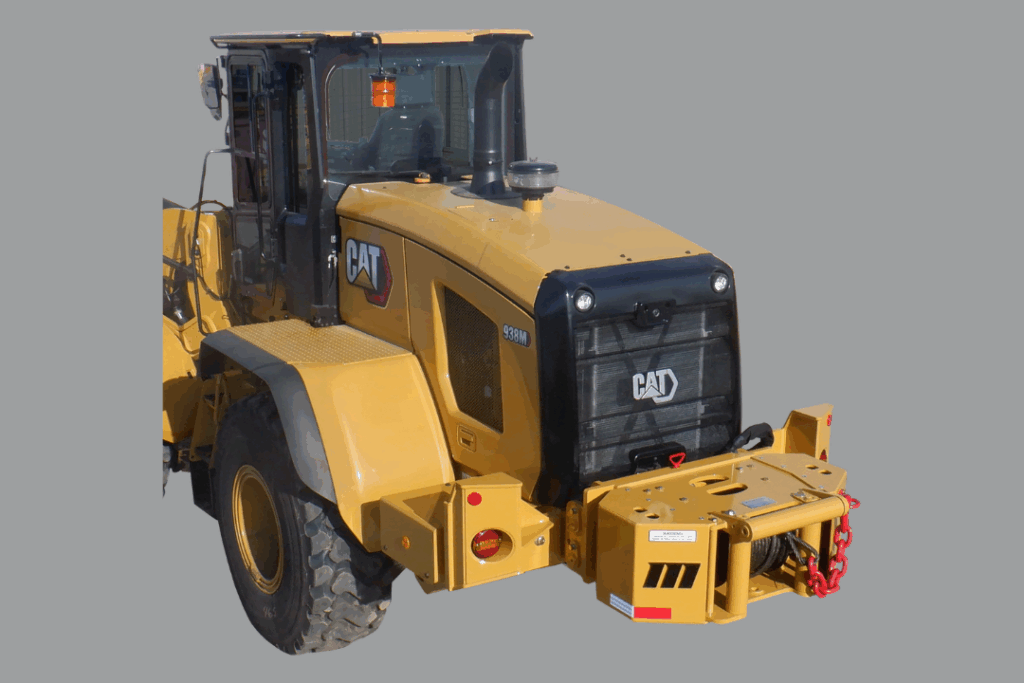
Custom Winch Attachments Built for Heavy-Duty Applications
Why Standard Equipment Isn’t Always Enough
At Midwestern Manufacturing, we work with crews who operate in demanding environments where off-the-shelf solutions often fall short. Heavy-duty industries such as construction, energy, recovery, rail, and infrastructure require equipment that performs reliably under extreme loads, harsh conditions, and unique jobsite constraints. That’s where custom winch attachments make a measurable difference. Instead of forcing a job to fit standard equipment, customized attachments allow winching systems to be engineered around the task itself, improving efficiency, safety, and overall performance in the field.
What Makes a Winch Attachment “Custom”
A custom winch attachment is designed to meet specific operational requirements rather than general-use assumptions. These attachments are engineered to integrate seamlessly with existing winch systems while addressing unique load characteristics, mounting constraints, or environmental challenges. Customization ensures that the attachment supports the intended application without compromising strength or control.
Common elements that are customized include:
- Load capacity and force distribution
- Mounting configuration and connection points
- Cable routing and guidance
- Structural reinforcement for extreme loads
- Compatibility with specific winch models or machines
By tailoring these elements, crews gain equipment that works with them instead of against them.
Solving Complex Load Challenges
Heavy-duty applications often involve loads that are oversized, uneven, or difficult to control. Standard attachments may not provide the stability or alignment required for safe operation. Custom winch attachments are engineered to address these challenges directly, improving load handling and reducing operational risk.
Custom designs help solve issues such as:
- Uneven load distribution that causes twisting or binding
- Limited clearance in confined work areas
- Non-standard pulling angles
- Specialized anchoring or recovery scenarios
- Repetitive high-load cycles that stress standard components
When attachments are built specifically for these conditions, winching operations become smoother, safer, and more predictable.
Improving Safety Through Purpose-Built Design
Safety is a primary concern in any heavy-duty winching operation. Improvised setups or mismatched attachments increase the risk of sudden load shifts, equipment failure, or operator error. Custom attachments reduce these risks by ensuring proper alignment, controlled force application, and structural integrity under load.
Safety-focused design considerations often include:
- Reinforced connection points to prevent failure
- Controlled load paths that minimize shock loading
- Improved visibility and clearance for operators
- Secure attachment interfaces that prevent slippage
These design principles support safer work practices and align with material-handling guidance from organizations such as the Occupational Safety and Health Administration, which emphasizes proper equipment selection and load control.
Supporting Efficiency on Demanding Jobsites
Efficiency is critical when working under tight schedules and high production demands. Standard attachments that don’t match the application can slow operations through repeated adjustments, repositioning, or downtime caused by equipment limitations. Custom winch attachments streamline workflows by allowing crews to complete tasks correctly the first time.
Efficiency gains often come from:
- Faster setup and integration with existing systems
- Reduced need for manual corrections
- Improved load control during long or complex pulls
- Fewer interruptions caused by attachment limitations
Over the course of a project, these gains add up to significant time and cost savings.
Applications Across Heavy-Duty Industries
Custom winch attachments are used across a wide range of industries where standard equipment cannot meet operational demands. Their versatility makes them especially valuable in environments that require precision, strength, and adaptability.
Common application areas include:
- Pipeline and utility construction
- Railroad and heavy equipment recovery
- Infrastructure and bridge work
- Marine and offshore operations
- Mining and industrial material handling
In each of these environments, customization allows winching systems to be optimized for the specific challenges crews face every day.
Adapting to Harsh Environments
Heavy-duty jobsites are rarely clean or controlled environments. Equipment is exposed to dust, moisture, vibration, temperature extremes, and uneven terrain. Custom winch attachments can be engineered with materials and finishes that withstand these conditions without compromising performance.
Environmental considerations often include:
- Corrosion-resistant coatings for wet or marine environments
- Reinforced structures for high-vibration applications
- Sealed components to protect against debris
- Designs that maintain performance in extreme temperatures
By addressing environmental factors during design, attachments deliver reliable performance even when conditions are far from ideal.
Enhancing Equipment Compatibility
Not all winching systems are the same, and compatibility issues can limit performance or create safety concerns. Custom winch attachments are designed to integrate directly with specific winch models, hydraulic systems, or mounting platforms. This eliminates the need for adapters or workarounds that introduce weak points into the system.
Benefits of improved compatibility include:
- Better load transfer between attachment and winch
- Reduced wear on cables and components
- Improved system balance and alignment
- Simplified maintenance and inspection
A well-integrated system performs better and lasts longer under heavy use.
Supporting Long-Term Durability and Cost Control
Durability is a major factor in the total cost of ownership for heavy-duty equipment. Attachments that are not designed for the application often fail prematurely, leading to repairs, downtime, and safety risks. Custom attachments are built with the load cycles, forces, and environmental exposure of the application in mind.
Long-term benefits include:
- Reduced component fatigue
- Fewer unexpected failures
- Longer service intervals
- Lower overall maintenance costs
By investing in attachments engineered for the job, operators protect both their equipment and their bottom line.
Engineering for Real-World Loads
Theoretical load ratings don’t always reflect real-world conditions. Dynamic forces, shock loads, and variable pulling angles can dramatically increase stress on equipment. Custom attachments account for these realities during design and fabrication. Custom winch attachments are engineered to handle real operating conditions rather than ideal scenarios, providing crews with confidence when working under pressure.
Choosing the Right Partner for Custom Solutions
Successful customization depends on understanding both equipment capabilities and field conditions. At Midwestern Manufacturing, we work closely with customers to evaluate application requirements, load characteristics, and environmental factors before designing a solution. This collaborative approach ensures that each attachment delivers measurable performance improvements rather than unnecessary complexity.
Built to Perform When It Matters Most
Heavy-duty winching demands more than generic solutions. Custom winch attachments provide the strength, precision, and reliability needed to handle specialized applications safely and efficiently. At Midwestern Manufacturing, we engineer attachments that are built for real jobsites, real loads, and real challenges, and when your operation requires equipment that performs without compromise, invest in purpose-built solutions that elevate your winching capabilities and put engineered performance to work today.
Author: Joe B.
Comments are closed.